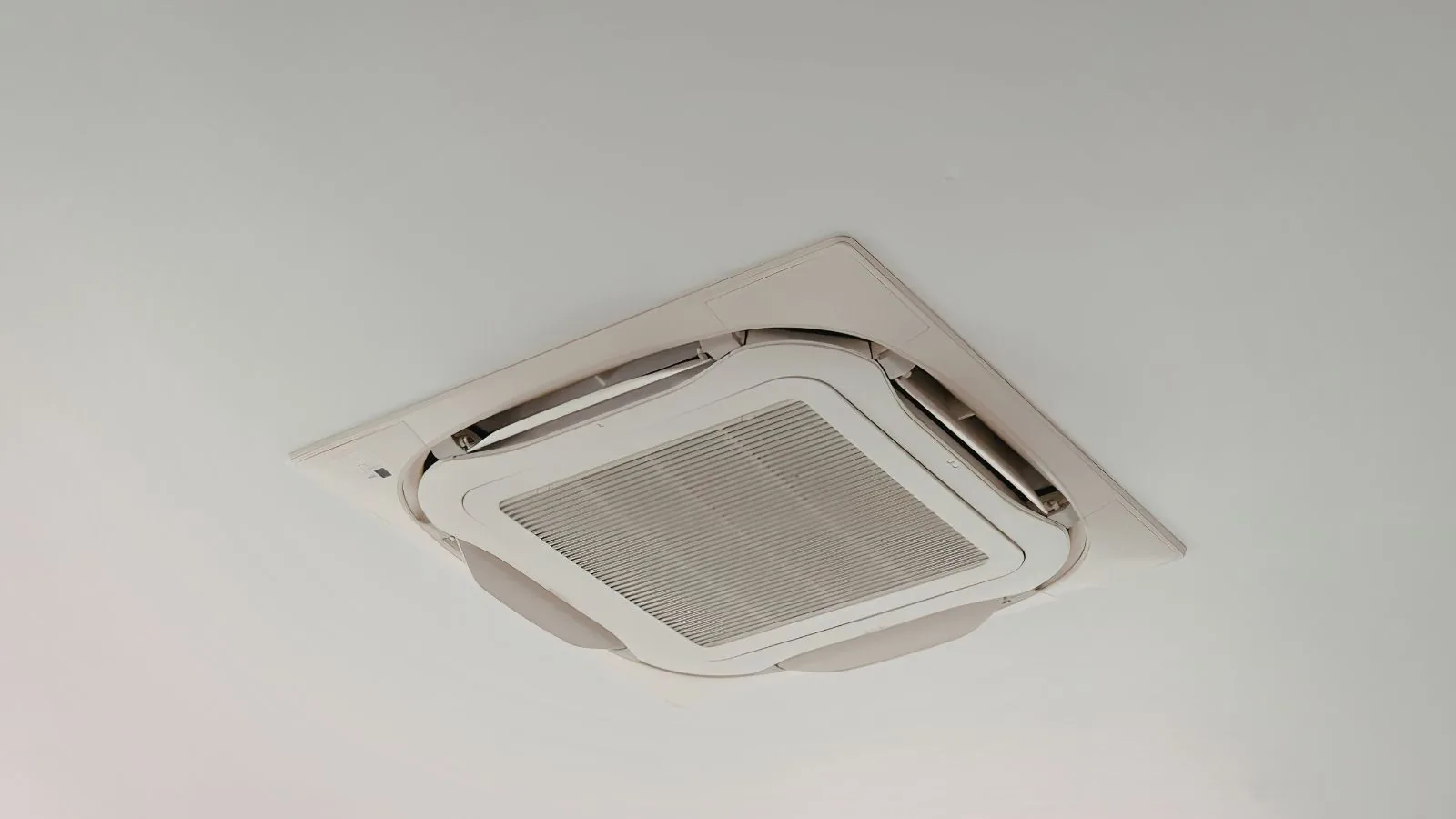
An AC leak is usually a drain problem, not a refrigerant problem. When an air conditioner cools air, it removes moisture that drains away through a condensate line. If that line clogs or the pan overflows, water spills into the attic, closet or ceiling around the air handler. In Wildwood summers, the system runs hard and the risk rises.
AC leak water damage is the damage caused by condensate water that escapes the drain system and soaks insulation, ceilings and walls.
Why an AC leaks
The most common cause is a clogged condensate drain line. Algae and sludge build up, the water backs up into the drain pan, and the pan overflows. A second cause is a cracked or rusted drain pan. A third is a frozen evaporator coil that melts and floods the pan faster than the line can drain it.
A float switch that failed, a line that lost its slope and a disconnected fitting all produce the same result. The leak is often slow, which is why a water stain on the ceiling is how most homeowners find out.
What to check first
Turn the thermostat off so the system stops making more water. Look at the drain pan under the air handler and the end of the condensate line outside. If the pan has standing water, the line is likely clogged. A wet-dry vacuum on the outside end of the line often clears a minor blockage.
If the coil is covered in ice, leave the system off and let it melt before calling an HVAC technician. Restoration handles the wet building. The HVAC tech handles the unit.
Attic air handlers and wet ceilings
An air handler in an attic sits over a drywall ceiling that may be soaked. Do not walk on a ceiling that is bowing, and do not climb into a wet attic with the unit powered. Turn off the system at the thermostat and the breaker before you check anything.
What gets damaged
Attic leaks wet insulation first, then the ceiling below. Closet leaks wet the floor and the walls around the unit. Leaks from a unit in a crawl space wet insulation and subfloor, which the crawl space page explains.
Because the leak is slow and the water is humid, mold may already be present when you find it. If you see dark staining or smell mustiness around the unit, the mold remediation page explains the next step.
| Where the unit sits | What gets wet | Common fix |
|---|---|---|
| Attic | Insulation, ceiling drywall | Remove wet insulation and ceiling, dry the cavity |
| Closet or utility room | Floor, adjoining walls | Extract, dry, replace base drywall |
| Crawl space | Insulation, subfloor | Remove wet insulation, dry and monitor |
| Garage | Slab and nearby walls | Dry the slab, check the wall base |
Cleanup and repair
Crews trace the water with moisture meters and thermal imaging, remove saturated insulation and drywall, and dry the area with air movers and dehumidifiers. Once readings are normal, the ceiling or wall is rebuilt. An HVAC technician clears the line, replaces the pan if needed and adds a float switch.
Why summer makes it worse
Missouri summers are hot and humid, so a central air system in Wildwood runs for long stretches and pulls a lot of moisture out of the air. A system that removes several gallons of water a day has no room for a partly blocked drain. The same unit that never leaked in spring can overflow in July.
Ask your HVAC technician about flushing the condensate line at the start of each cooling season, and about adding a float switch that shuts the system off when the pan fills. Those two steps cost little compared with a ceiling repair.
Standards and sources
Drying after an AC overflow follows the ANSI/IICRC S500 water damage standard, and the EPA advises keeping indoor humidity below 60 percent, ideally 30 to 50 percent, so a dehumidifier stays part of the plan until readings settle.
What affects the cost
- How long it leaked. A slow leak over weeks reaches farther than a one-day overflow.
- Location of the unit. Attic leaks add insulation and ceiling work.
- Mold. If growth is present, containment and removal are added.
- Drying time. Enclosed cavities dry slowly.
- Rebuild scope. Ceiling texture, paint and insulation vary the most.
Want your real number? Call the line. Scope and price are explained before work starts.
AC leaking into the ceiling?
Turn the unit off and call.
Insurance and AC leaks
Sudden overflow from a failed condensate system is sometimes covered, while slow leaks that went on for a long time often are not. Photograph the stain and the unit, keep receipts and ask your insurer how your policy treats the cause.
AC Leak Water Damage questions answered
Why is my AC leaking water inside the house?
Usually the condensate drain line is clogged, and the drain pan fills and overflows. A cracked pan or a frozen coil can do the same.
Can I keep running the AC if it is leaking?
No. Running the system keeps making condensate. Turn it off and call about the leak.
Can an AC leak cause mold?
Yes. The water is slow and the area is warm and humid, which favors growth. Check insulation and drywall around the unit.
Who fixes the AC, and who fixes the damage?
An HVAC technician repairs the system. Restoration dries and repairs the building.