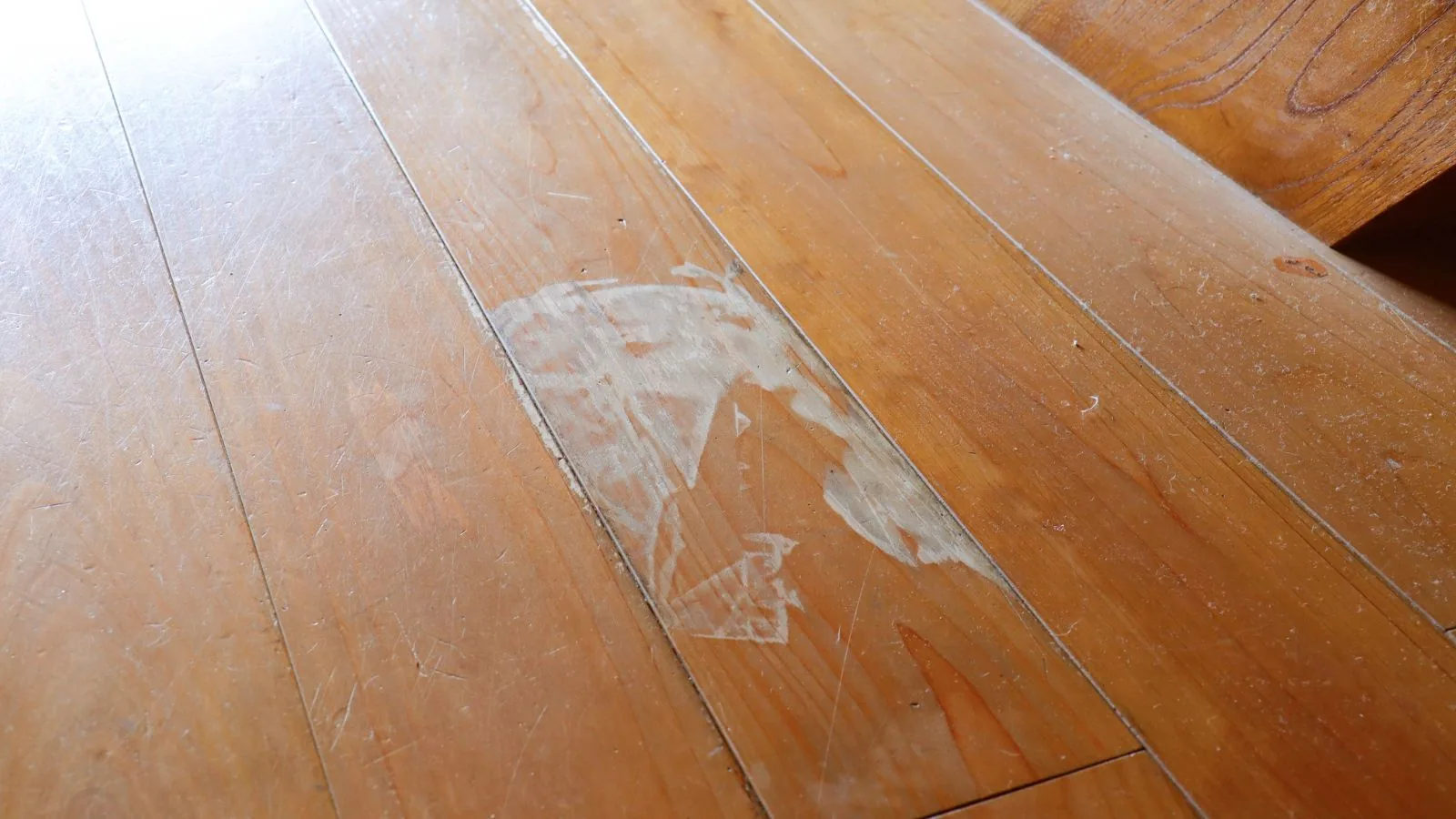
Hardwood floor water damage is the warping, cupping, buckling and staining that happen when wood absorbs water. Wood is a natural material that swells when wet and shrinks when dry, so the same board can change shape twice, once going in and once drying out.
What water does to wood
When water gets under a board, the underside swells faster than the top. Edges rise and the center dips, which is cupping. If the swelling is severe and the boards push against each other, the floor can lift off the subfloor, which is buckling. Dark stains mean water or mold has reached the wood fibers.
Engineered wood and laminate behave differently. Laminate swells at the seams and delaminates. Engineered boards cup or peel at the top layer. The sooner water is removed and drying starts, the better the outcome.
What to do now
Wipe up standing water, remove rugs and furniture, and open windows if the air is dry. Do not use heat guns or sand wet boards, since that traps moisture and causes cracks. Photograph the floor before anything is moved and call for a moisture check.
Slips and wet floors
Wet hardwood is slick. Wear shoes with grip and avoid carrying heavy items across it. If water is near outlets, turn off power to the area at the panel only if you can do so safely.
Drying wood floors
Wood floors can often be saved if drying begins within a day or two. Crews use specialized mats and tented systems that pull moisture from under and through the boards. Meters track the moisture content of the wood and the subfloor. Drying is slow on purpose, since fast drying can split boards.
After drying, boards may relax and flatten. If they do not, sanding and refinishing can level them. If they stay cupped, are moldy or are separated from the subfloor, replacement is the next step. The structural drying page explains monitoring.
| Condition | Typical result |
|---|---|
| Light cupping, dried quickly | Often flattens after drying |
| Moderate cupping | Sand and refinish after drying |
| Buckling | Often replaced in the affected area |
| Dark staining or mold | Boards removed, see mold remediation |
| Laminate with swollen seams | Usually replaced |
Where the water came from
Common causes include appliance leaks, burst pipes and flooding. Slab leaks push water up from below, and the slab leak page covers that. Basement or crawl space moisture can cup floors above. The source must be fixed or the floor will fail again.
Species, finish and thickness
Solid oak, maple, hickory and pine do not respond to water the same way. Dense species move less, softer woods dent and cup more. The finish matters too. A thick polyurethane coat slows water getting into the board from above, but water that enters from the sides or below is trapped, so a finished floor can hold moisture for a long time.
Thickness matters because thicker solid boards can often be sanded after drying, while thin engineered boards have only a thin wear layer and may not survive sanding more than once.
Engineered and laminate floors
Engineered wood has a plywood core and a hardwood veneer. It handles humidity changes better than solid wood but can delaminate if soaked. Laminate has a fiberboard core under a photo layer. When the core swells, the seams lift and do not go back. Floating floors can be lifted, dried and sometimes reinstalled if the core is intact, but this depends on the product.
What to expect over time
Wood dries slowly on purpose. A floor that was cupped on day two may look worse on day five and better on day thirty. Moisture readings in the boards and in the subfloor decide when a floor is ready for sanding. Refinishing too soon locks in moisture and cracks the finish.
Do not use heat
Heat guns, space heaters and propane heaters dry the surface and leave the core wet. Fast drying splits boards and can start a fire. Controlled airflow and dehumidification are slower and safer. If you want to help, remove rugs, keep furniture off the floor and keep the room's air moving without pointing a hot blast at the boards.
Standards and sources
Wood floor drying follows the ANSI/IICRC S500 standard, which treats hardwood as a material that holds water deeply. The EPA advises drying water-damaged materials within 24 to 48 hours, although wood itself is dried slowly on purpose.
What affects the cost
- Species and thickness. Solid, engineered and laminate each behave differently.
- Time. Floors dried within a day or two do better.
- Area. The boards affected set the equipment and labor.
- Subfloor. Wet subfloor adds drying or removal.
- Refinish. Sanding and finishing are separate from the dry-out.
Want your real number? Call the line. Scope and price are explained before work starts.
Floors cupping?
Call before sanding or refinishing.
Insurance and floors
Sudden water damage is often covered, while long-term moisture is often not. Photograph the floor before and after drying, keep receipts and ask your insurer.
Hardwood Floor Water Damage questions answered
Will my hardwood floor go back to normal?
Often, if it is dried quickly and slowly. Some floors need sanding, and some need replacement.
How long does it take for cupped floors to flatten?
It can take weeks. Do not sand until moisture readings are normal.
Can laminate be dried?
Rarely. Swollen laminate seams usually do not return to shape.
Why does the floor cup after the water is gone?
Moisture trapped below keeps swelling the underside. Drying the subfloor stops it.