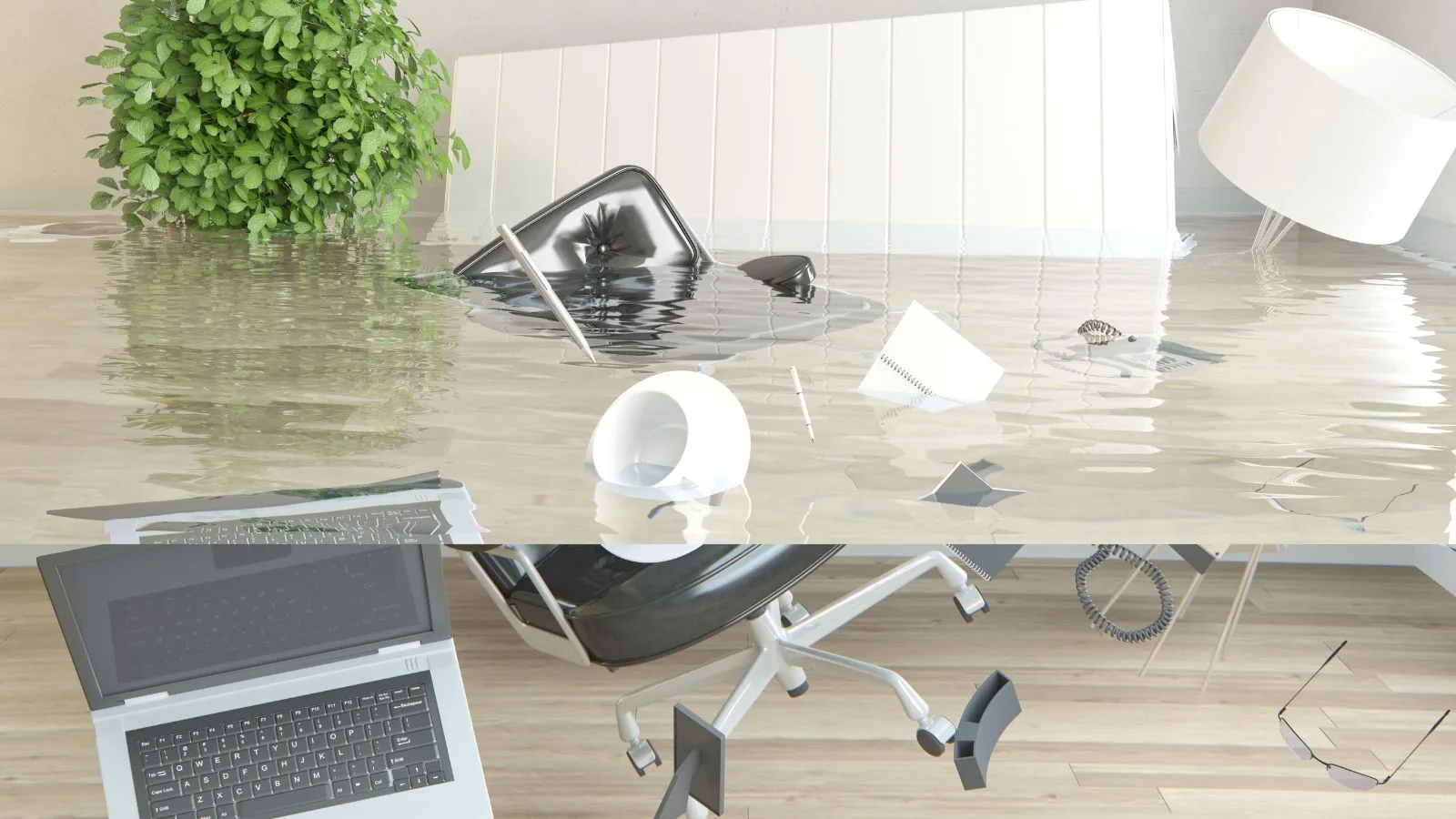
Commercial water damage is an emergency because a closed business loses income every day, and water spreads through shared walls, ceilings and floors. If your Wildwood office, shop, restaurant or multi-unit building has taken on water, shut off the source if you can, keep staff out of wet areas and call the 24/7 line.
Commercial water damage restoration is the extraction, drying and repair of water-damaged commercial space, with a focus on limiting downtime and protecting inventory, records and equipment.
What makes commercial jobs different
Commercial buildings have larger floor areas, shared walls and systems that serve more than one tenant. A pipe break on one floor can wet three floors. Suspended ceilings, carpet tile, raised floors and roofs with multiple layers behave differently from a house.
Roles also differ. Property managers, tenants, owners and insurers all have a part. Knowing who is responsible for the building and who for contents helps keep the job moving.
Keep people and power safe
Keep staff and customers out of wet areas. Do not enter rooms where water is near electrical panels, server racks or lighting. Fire alarms and sprinklers can be affected by water damage, so tell the fire marshal or property manager if protection systems were hit.
Urgent first steps
Stop the source, protect the contents and document the loss. Move inventory, files and electronics out of the water. Photograph everything before it is touched. Tell your property manager or landlord, and tell your insurer promptly.
Crews then extract water, remove wet materials such as ceiling tile and carpet, and set up drying equipment. Temporary measures such as board-up and tarping can protect the building while repairs are planned. For weather damage, see storm water damage.
Common commercial sources
| Source | Typical problem |
|---|---|
| Supply pipe or fitting | Fast flooding across floors |
| Roof leak | Wet insulation and ceiling tile |
| Sprinkler or fire line discharge | Large volumes in a short time |
| Restroom or kitchen drain backup | Contaminated water, see sewage cleanup |
| HVAC condensate | Slow leaks that stain ceilings and walls |
Reducing downtime
The speed of drying decides how soon a business reopens. Crews can dry in sections so part of the space stays usable. They can phase work around hours. Moisture readings show when each zone is dry and ready for repair. The structural drying page explains the verification.
Wildwood has a large number of small businesses along its main roads and in newer developments, and the mixed-use blocks of Wildwood Town Center put shops, restaurants and apartments under shared roofs. Planning Department rules apply to repairs there. Minor repairs do not need a building permit but need zoning authorization, and structural alterations need a permit, so confirm before rebuild work starts.
Documentation for property managers
Commercial losses involve more paperwork than residential ones. Keep a log of when the water was discovered, who was notified and what was done. Photograph each affected room before work starts and again after drying equipment is placed. Ask for moisture logs and a list of materials removed, since insurers and landlords often ask for both.
Tenants and owners should check the lease early. Many leases say who handles building systems and who handles contents and improvements. A clear record helps when the question comes up later.
Multi-unit buildings
In an apartment building or a strip of shops, water from one unit moves through shared walls and ceilings to the next. A supply line break upstairs can wet three units below. The first call should include the building layout, the unit numbers affected and the location of the main shutoff for the building.
Notify neighbors early, and ask the property manager which units are occupied. Drying equipment may need access to several spaces, and keys, alarm codes and schedules affect how fast the work can start.
Restaurants, retail and offices
Different businesses lose different things. A restaurant has to close if a kitchen floods, and a food business has to deal with spoiled stock and health rules. Retail loses inventory and display time. Offices lose records, computers and work hours. Move electronics and paper records off the floor first, and keep an inventory of what was affected.
In all three, drying speed sets the reopening date. That is why equipment is placed early and why moisture readings are checked daily. Ask for a plan that names which zones will be dry first.
Standards and sources
Commercial drying follows the same ANSI/IICRC S500 standard as residential work, and the EPA advises drying within 24 to 48 hours to prevent mold. Ask any company how readings will be logged zone by zone in a larger building.
What affects the cost
- Square footage. Larger areas need more equipment and time.
- Water category. Contaminated water adds protective measures.
- Materials. Carpet tile, ceiling grid and drywall vary in cost.
- Occupancy. Working around tenants and hours changes scheduling.
- Contents. Moving and protecting inventory adds labor.
Want your real number? Call the line. Scope and price are explained before work starts.
Business flooded?
Describe the building and call.
Insurance and commercial losses
Commercial policies differ in how they treat water, business interruption and contents. Photograph the damage, keep records of lost inventory and ask your insurer how your policy treats the cause. Keep receipts for emergency steps.
Commercial Water Damage questions answered
Do you handle commercial water damage emergencies at night or on weekends in Wildwood?
Yes. The line is open 24 hours a day. Same-day response is offered when it is available.
Can you work while we stay open?
Sometimes. Drying can be sectioned, and work can be scheduled around hours, depending on the layout and the water.
Who pays, the tenant or the landlord?
It depends on the lease and the policies. Tell your property manager and insurer right away.
What should I document?
Photos of damage, a list of damaged contents, receipts for emergency steps and any communications with your insurer.