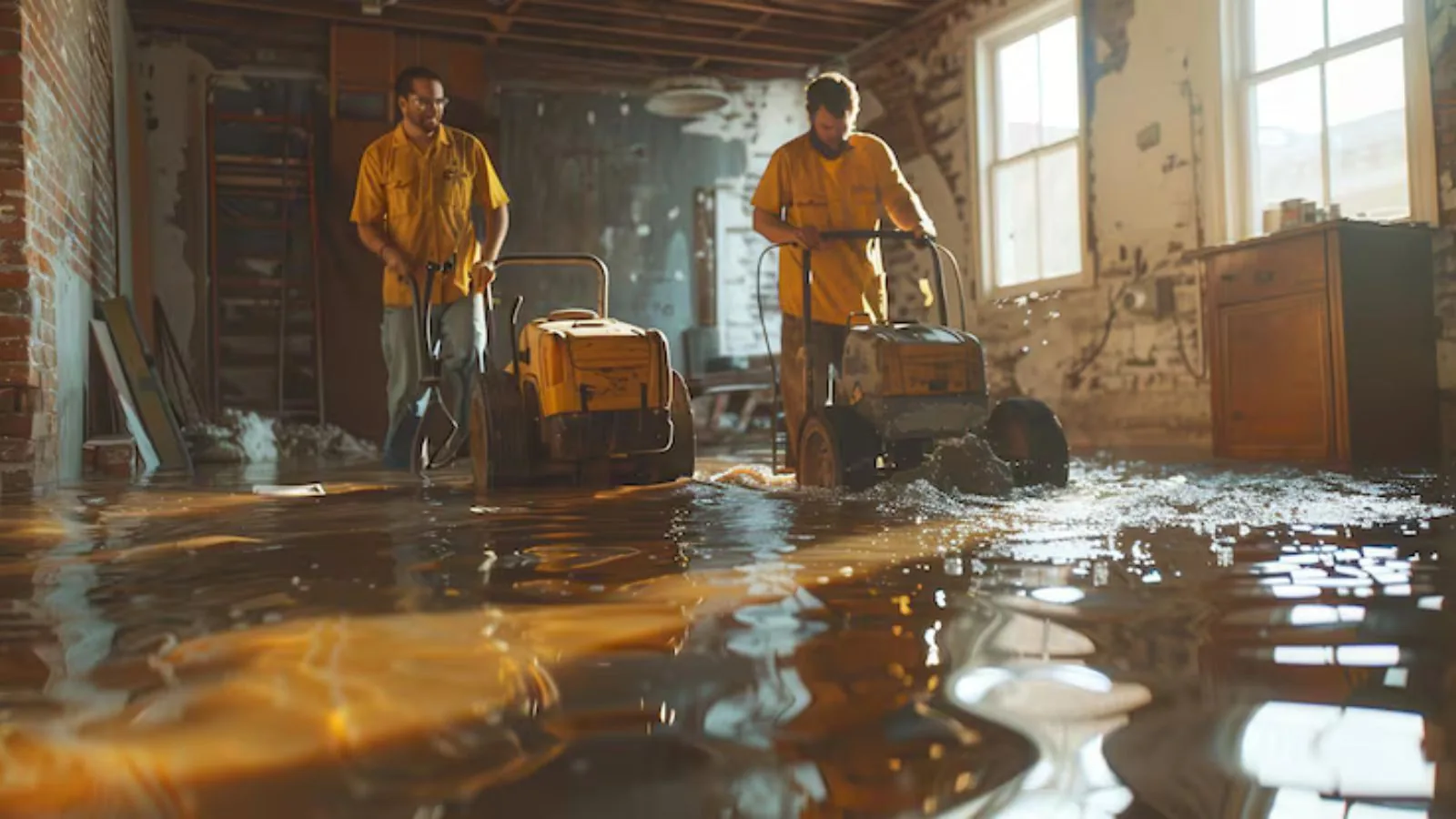
Standing water in a Wildwood home is an emergency because every hour it sits, it travels into drywall, carpet pad and subfloor. The 24/7 emergency line takes extraction calls day and night, and while you wait for a crew you can shut off the water source, stay clear of cords and outlets near the water, and lift valuables off the floor.
Water extraction is the removal of standing and pooled water with pumps, wet vacuums and extraction units. It is the first stage of mitigation and it comes before drying, because equipment cannot dry a room that still has water on the floor.
When standing water is an emergency
A small spill is a mop job. Standing water becomes an emergency when any of these is true.
- The water is deeper than a thin film and is still spreading toward other rooms.
- It is soaking carpet, pad or a finished basement floor.
- It has reached outlets, baseboard heaters, a furnace or a water heater.
- You cannot find or reach the source to stop it.
- The water came from outside, from a creek, a drain or a sewer line.
Electrical safety comes before everything else
If water is touching outlets, power strips or the electrical panel, do not walk through it. Turn off power at the panel only if you can reach it while standing on dry ground. If you cannot, call your electric utility or 911 for any shock or fire risk before you call the restoration line.
How extraction is done
Crews match the tool to the depth of the water. Deep water in a basement is moved with submersible pumps. Water on hard floors is pulled up with wet vacuums and squeegee tools. Soaked carpet is worked with a weighted extraction wand that pulls water out of the fibers and the pad underneath.
Once the surface water is gone, crews check what remains with a moisture meter. Wet readings in the lower drywall, baseboards and subfloor mean the water has already moved into the structure, and the job continues into drying.
| What you see | Usual method | What follows |
|---|---|---|
| Ankle-deep water in a basement | Submersible pump, then wet vacuum | Moisture readings, then drying equipment |
| Thin water over tile or vinyl | Wet vacuum and squeegee | Check baseboards and cabinet bases |
| Soaked carpet and pad | Extraction wand, pad assessment | Pad is often removed, carpet may be dried in place |
| Water behind a wall | Moisture meter and thermal imaging | Selective drywall removal and drying |
Extraction is not drying
Pulling out the visible water is only half the job, and this is where many do-it-yourself attempts go wrong. A shop vacuum can clear a floor, but it does not reach the water inside drywall, framing and subfloor. That water stays behind and feeds mold. The EPA advises drying water-damaged areas within 24 to 48 hours to prevent mold growth, so the handoff from extraction to structural drying should happen the same day.
If the water was soaked into carpet, the carpet restoration page covers what can be dried in place and what must be thrown out. If a pipe caused the water, burst pipe damage explains the shutoff and the repair sequence.
Water from inside versus water from outside
Where the water came from changes who you call and how the water is handled. Water from a broken supply line or an overflowing appliance is usually treated as clean at first, but it does not stay clean for long when it sits on floors. Water from a creek, a floor drain or a sewer line is contaminated from the start, and the crew treats it with protective equipment and a sanitizing step.
If the street main is the problem, such as a water main break, Wildwood's city FAQ says water is provided by Missouri American Water and that you should contact them directly. That call is theirs to handle, and the restoration line handles what is inside your walls. When the source is a creek or river, the flood damage page covers the extra steps, and Eureka shows how river flooding plays out in a nearby town.
Standards and sources
Extraction is the first stage of the ANSI/IICRC S500 standard for water damage restoration, and the EPA advises drying water-damaged areas within 24 to 48 hours to prevent mold. Pumping water out is only the opening move.
What affects the cost of extraction
Extraction is one stage of a larger job, so it is priced along with everything around it. These factors move the number.
- Depth and volume. More water means more pump time and more passes with extraction equipment.
- Water category. Contaminated water adds protective gear, disposal rules and sanitizing.
- Materials affected. Finished floors, carpet pad and cabinet bases are handled differently from bare concrete.
- Access. A walkout basement is easier to reach than a below-grade room with a narrow stair.
- What comes next. Drying days and any repair work are added after the extraction itself.
Want your real number? Call the line and describe the room, the depth and the source. Scope and price are explained before work starts.
Water on the floor right now?
Same-day response is offered when it is available.
Insurance and extraction
Insurers generally ask for photos and a record of what you did to limit the loss. Take photos of the standing water before anything is moved, keep receipts for emergency steps, and call your insurer promptly. Sudden and accidental water damage is often covered, and flood damage usually is not, so ask your insurer how your policy treats the cause of your water.
Water Extraction questions answered
Do you handle water extraction emergencies at night or on weekends in Wildwood?
Yes. The emergency line is open 24 hours a day, every day, so extraction calls at 3 a.m. or on a holiday are answered the same way as a weekday call. Same-day response is offered when it is available, and nobody on the line promises an arrival time they cannot keep.
Can I extract the water myself with a shop vacuum?
You can clear a thin film of clean water from a hard floor. You cannot reach water inside drywall, subfloor or carpet pad, and sewage or creek water should never be handled without protective equipment. Use the vacuum to buy time, then call for a moisture check.
How long does water extraction take?
The extraction itself is often a matter of hours for a single room. The full job takes longer because drying follows, and drying is measured with moisture readings rather than a fixed schedule.
Will extraction save my carpet?
Sometimes. Clean water caught quickly can leave carpet that dries in place, but the pad underneath is often removed. Contaminated water usually means the carpet and pad are replaced.