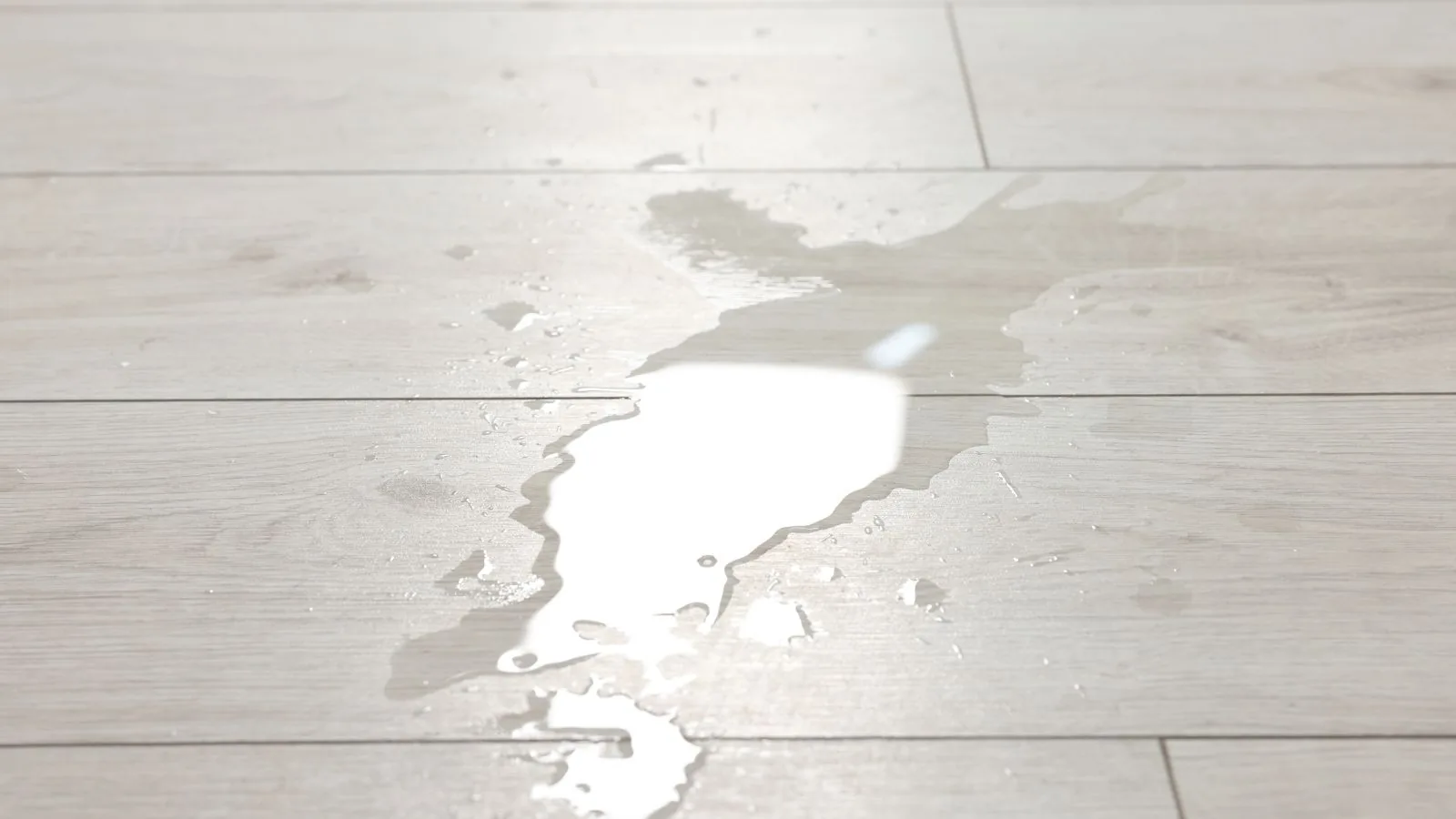
An appliance leak is an emergency when water is spreading across the floor, because it seeps under cabinets and flooring where you cannot see it. If a washer, dishwasher or refrigerator is flooding your Wildwood home, shut off its water valve, unplug it only if the cord and outlet are dry, and call the 24/7 line.
Appliance leak water damage is the damage caused by a supply hose, drain line, pump or tank on an appliance that fails and releases water inside the house.
Stop the water at the source
Every water-connected appliance has a shutoff valve, usually behind or beside it. For a washing machine, there are two valves on the wall for hot and cold. For a dishwasher, the valve sits under the sink. For a refrigerator with an ice maker, a small line runs from the wall or the floor behind the unit. If you cannot find the valve, close the main.
Do not reach into water to pull a plug. If the outlet is wet, turn off the breaker first when the panel is reachable and dry, and call the electric utility or 911 for any shock risk.
Heavy appliances and wet floors
Do not try to pull a full washing machine or refrigerator out of a flooded area. Wet floors are slippery and the units are heavy. Stay out of the water if power is on, and call the line to describe what you see.
How each appliance fails
Washing machines fail at the supply hoses, the drain hose and the pump. A burst hose is the most common and the fastest leak. Dishwashers fail at the door seal, the inlet valve and the drain line. Refrigerator leaks usually come from the ice maker line or a clogged defrost drain and are often slow.
Slow leaks are the costly ones. Water that drips behind a refrigerator for months soaks the subfloor and starts mold long before a stain shows. If you notice a soft floor near an appliance, a musty smell or a swollen baseboard, call before it gets worse.
| Appliance | Common failure | What it usually wets |
|---|---|---|
| Washing machine | Burst supply hose, clogged drain | Laundry floor, walls, rooms below |
| Dishwasher | Door seal, inlet valve, drain line | Kitchen floor, cabinet base, subfloor |
| Refrigerator | Ice maker line, defrost drain | Flooring and subfloor behind the unit |
| Water heater | Tank, fittings, relief valve | Closet or basement floor, see that page |
What cleanup involves
The water is extracted first. Then crews check the subfloor, cabinet bases and nearby walls with moisture meters. Because appliance leaks travel under flooring, thermal imaging helps find the pooled area. Wet toe kicks, baseboards and a strip of drywall are removed if they stayed wet.
The dry-out runs with air movers and dehumidifiers until readings return to normal. Vinyl and laminate floors often need lifting to dry underneath. The hardwood floor page covers what happens to wood in these cases, and the wall and drywall page covers the walls.
Prevent the next leak
Replace rubber washing machine hoses with braided stainless ones, and look at them yearly. Do not leave a washer or dishwasher running when no one is home. Pull the refrigerator out once a year and check the line and the floor. A small drain pan under a washer on an upper floor catches minor leaks before they reach the ceiling.
Standards and sources
Professional drying after an appliance leak follows the ANSI/IICRC S500 standard. The EPA advises drying water-damaged materials within 24 to 48 hours, which is why a hose that burst overnight deserves a call the same morning.
What affects the cost
- How long it leaked. A burst hose is quick and wide, while a slow leak is hidden and deeper.
- Flooring type. Vinyl and tile dry differently from wood and carpet.
- Floor level. An upstairs laundry room adds ceiling and wall damage below.
- Cabinets and walls. Water that reached a cabinet base adds removal work.
- Rebuild scope. Flooring and cabinet repair vary the most.
Want your real number? Call the line. Scope and price are explained before work starts.
Appliance leaking right now?
Shut its valve and call.
Insurance and appliance leaks
Sudden appliance failures, such as a burst hose, are often covered. Long-term seepage often is not. Photograph the appliance, the damaged floor and the failed part, keep receipts and ask your insurer how your policy treats the cause.
Appliance Leak Water Damage questions answered
Do you handle appliance leak emergencies at night or on weekends in Wildwood?
Yes. The line runs around the clock. Same-day response is offered when it is available, and the first call covers how to stop the water safely.
Which appliances leak the most?
Washing machines and dishwashers cause the most sudden leaks, and refrigerator ice maker lines cause many slow ones.
Can water from an appliance leak damage the room below?
Yes. Water that reaches the subfloor often travels to the ceiling beneath it, which is common in upstairs laundry rooms.
Do I have to pull the appliance out?
Often the appliance is moved so crews can reach the wet floor behind and under it. Do not do this yourself if the floor is wet or the unit is plugged in.