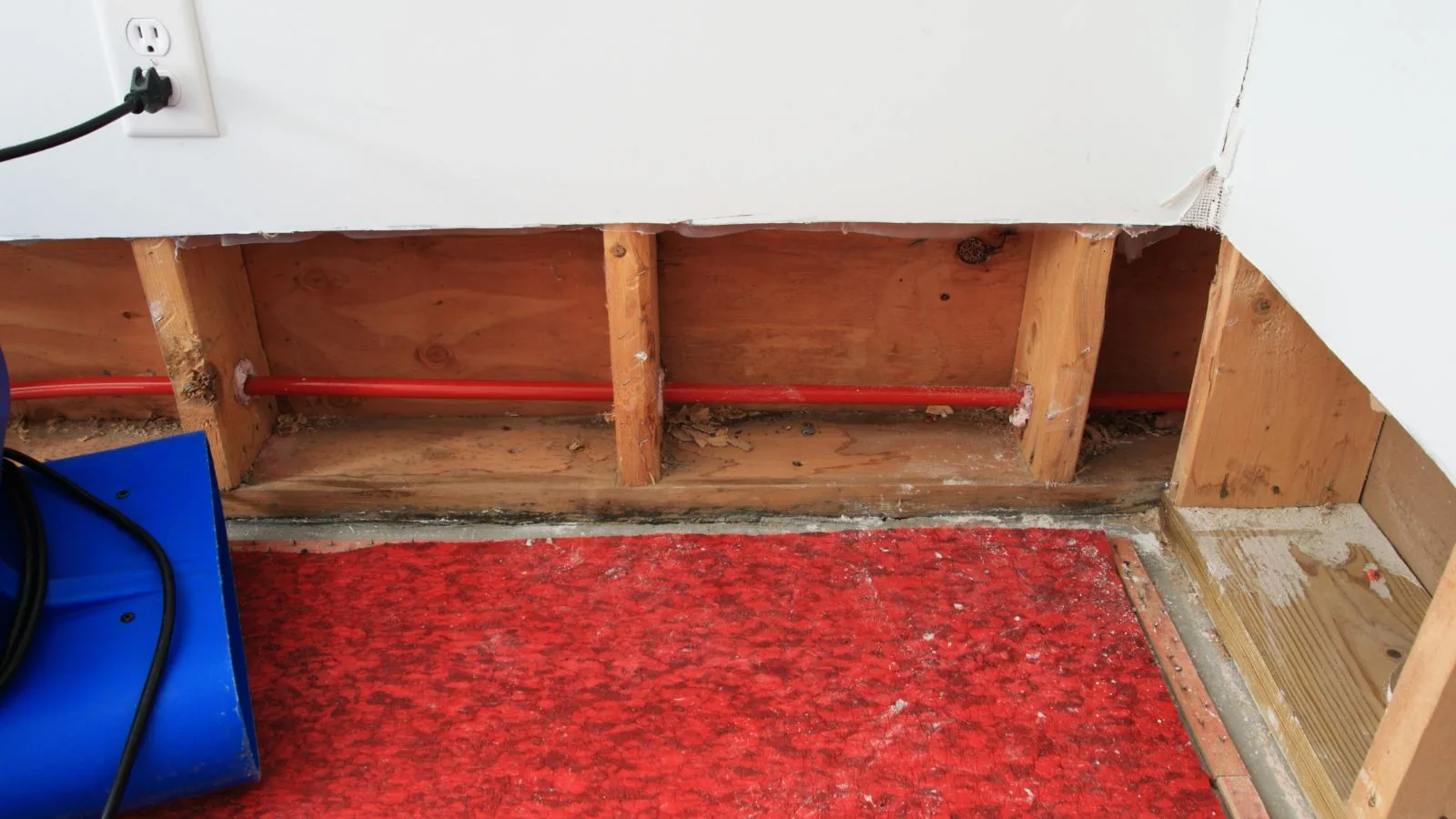
Carpet water damage is the soaking of carpet fibers, backing and pad. Carpet works like a sponge, and the pad underneath holds even more water than the carpet itself. Because the pad sits against the subfloor, it keeps the floor wet long after the surface seems dry.
Water category decides everything
Clean water from a supply line can often be dried in place if it is caught within a day or so. Gray water from an appliance is riskier. Black water from sewage or flooding contaminates carpet and pad, and they must be removed. The sewage page and the flood page explain why.
The IICRC S500 standard guides this approach. Time matters too, since clean water becomes more contaminated the longer it sits.
What to do now
Remove furniture and lift wet items off the carpet. Place foil or plastic under furniture legs so stains do not spread. Open windows if the air is dry, run fans and take photos. Do not use a household vacuum on wet carpet. If the wet area is large, call.
Wet carpet and electricity
Cords, power strips and lamps on wet carpet are a shock risk. Unplug items only if you are standing on dry ground, and keep children and pets out of the area.
Dry in place or remove
If the water is clean and the carpet is caught early, crews extract water with a wand, lift a corner and either dry the pad in place or replace it. Pad is inexpensive and often replaced, while carpet fibers can be saved. A wand and air movers dry the carpet from above and from below.
If the carpet has been wet for days, smells musty, has delaminated or shows growth, it is removed. Cleaning cannot remove mold that has grown into the backing. For long-wet floors see mold remediation.
| Situation | Typical outcome |
|---|---|
| Clean water, caught within a day | Dry carpet in place, replace pad if needed |
| Gray water | Case by case, often remove pad |
| Black water | Remove carpet and pad |
| Wet for days with odor | Remove and check subfloor |
| Wall-to-wall over a slab leak | See slab leak page |
Drying the subfloor
Wet carpet usually means a wet subfloor. Moisture meters check the concrete or wood beneath. If the subfloor is wet, it needs its own drying. Skipping this causes odor and mold under new carpet later. The structural drying page explains the verification.
Types of carpet and pad
Not all carpet behaves the same way. Synthetic fibers such as nylon and polyester dry well and do not hold water inside the fiber. The backing and the pad are the problem. Wool and natural fibers hold more moisture and can stain or shrink. Berber and loop styles can snag when they are lifted for drying.
Pad comes in several types, including rebond foam, rubber and fiber. Foam pad soaks up water like a sponge and is usually the first thing to go. Because pad is inexpensive compared with the carpet above it, replacing the pad is often the sensible choice even when the carpet itself can be dried.
Lifting and drying in place
When carpet is worth saving, the crew detaches a corner from the tack strip, folds it back and removes the wet pad. A drying mat or an air mover is placed under the carpet so air moves through the backing. This is called floating the carpet. The subfloor below is dried at the same time, with readings logged until it is dry.
Drying in place without lifting often leaves the pad and the subfloor wet. That is how a carpet that looks dry smells musty a week later.
Stains, odors and cleaning
After the structure is dry, carpet can be cleaned with hot water extraction. Cleaning removes dirt carried in by the water and helps with odor. Stains from tannins in wood or from dyes may remain. If a smell persists after cleaning, moisture or growth is still present below the surface, and the carpet or pad may need to be replaced.
Stairs, rugs and area carpets
Area rugs can often be cleaned and dried off site, and wool and silk rugs should go to a rug specialist. Stair carpet is difficult because the pad is thin and the water runs down it. Check the stairs and the landing below when a leak came from upstairs.
What affects the cost
- Water category. Contaminated water means replacement.
- Time. Fast response saves more carpet.
- Area. Wall-to-wall rooms add equipment.
- Pad and tack strip. Replacement adds material and labor.
- New carpet. Replacement is priced apart from the dry-out.
Want your real number? Call the line. Scope and price are explained before work starts.
Carpet soaked?
Call so drying can start.
Insurance and carpet
Sudden water damage is often covered. Photograph the carpet and the source, keep receipts and ask your insurer how your policy treats it.
Carpet Water Damage questions answered
Can wet carpet be saved?
Often if the water is clean and drying starts within a day. Contaminated water means replacement.
Do I need to replace the pad?
Usually. Pad is inexpensive and holds water against the subfloor.
How fast does mold grow on wet carpet?
The EPA advises drying within 24 to 48 hours to prevent mold. Waiting longer raises the risk.
Will cleaning remove the smell?
If the smell is from trapped moisture, cleaning alone will not. The carpet or pad may need to come out.