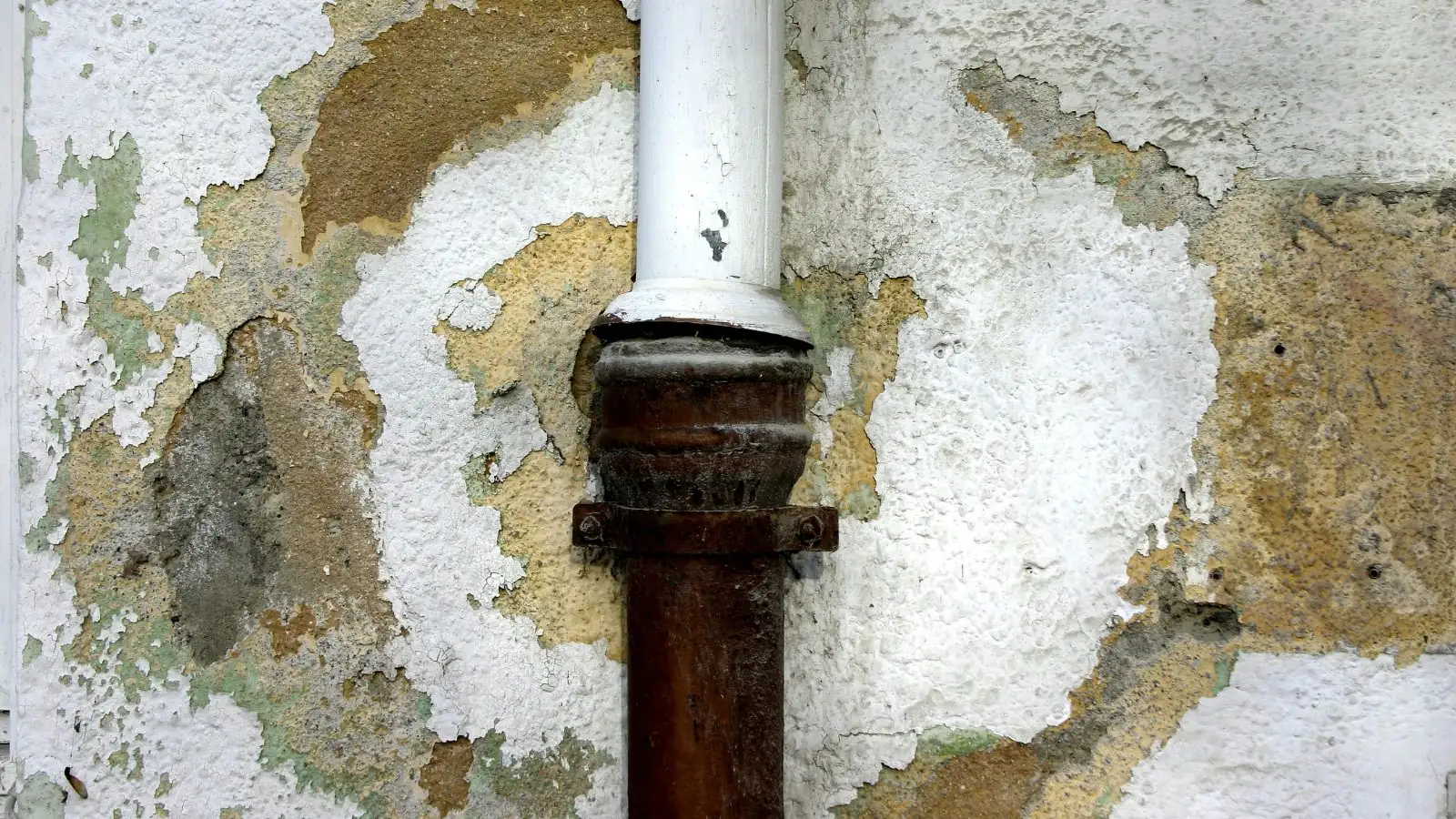
Wall and drywall water damage is the staining, swelling, softening and growth that happen when water gets into a wall. Drywall is gypsum between two sheets of paper, and the paper is food for mold. When it stays wet, it loses strength and starts to fall apart.
Signs of a wet wall
Look for stains that spread, paint that bubbles or peels, a soft or crumbling surface, swollen baseboards, a musty smell and wallpaper that lifts. Cold or damp spots can also show up with a hand. A moisture meter or thermal camera finds wet areas that cannot be seen.
Water in a wall may come from a pipe, an exterior leak, a roof leak, an appliance, a window or flooding. The visible stain is often below or beside the real source.
Outlets, switches and soft walls
Water inside a wall can reach outlets and switches. Do not use outlets on a wet wall. Turn off the circuit at the panel only if you can do it from dry ground. Do not push on a bulging wall or ceiling because wet drywall can fail suddenly.
What gets cut out
Drywall that stayed wet or is soft is cut out. A common practice is to cut a bit above the highest wet reading, since water wicks upward. Wet insulation comes out as well. Baseboards are removed so the wall cavity can dry.
Drywall that was wet briefly and tested dry can often stay. Meters, not appearance, make that call. The cavity is then dried with air movers and dehumidifiers until readings return to normal, as described on the structural drying page.
| Condition | Typical outcome |
|---|---|
| Light stain, dry readings | Seal and repaint |
| Wet but solid, caught early | Dry in place with cavity airflow |
| Soft, crumbling or bulging | Cut out and replace |
| Visible growth | Remove, see mold remediation |
| Wet insulation inside | Remove and replace |
Rebuild and finish
After the cavity tests dry, new drywall is hung, taped, textured and painted. Matching texture and paint takes some skill. Baseboards and trim are reinstalled. Minor repairs in Wildwood need zoning authorization but not a building permit, according to the Planning Department. A repair that touches framing or a structural wall needs a permit, so ask the city first.
Common causes appear on other pages. Burst pipes and frozen pipes are the main wall-cavity sources.
Insulation inside the wall
Different insulation reacts differently to water. Fiberglass batts hold water and sag, so wet batts are usually removed. Blown cellulose soaks up water and takes a long time to dry. Spray foam can resist water but may trap moisture behind it. Whatever the type, wet insulation against a wall can keep the cavity damp for weeks, so it is often taken out and replaced.
Plaster and older walls
Some older Wildwood homes have plaster over lath rather than drywall. Plaster handles brief wetting better than drywall but can crack, bulge and detach from the lath when soaked. Repairing plaster takes a trained hand, and older paint may contain lead, so ask about testing before sanding or demolition in a house built before 1978.
Exterior wall leaks
A wall that stains after rain may have a leak from a window, siding, flashing or the roof. Finding and fixing the opening is a separate job from drying the wall. Tarping or caulking helps temporarily. The longer an exterior leak runs, the more likely the sheathing and framing are involved, not just the drywall.
Check before you close the wall
Before new drywall goes up, ask to see the moisture readings for the framing and the sheathing behind it. Closing a wall over damp studs is the most common cause of a musty smell weeks later. A few minutes with a meter at that stage saves a second demolition.
Primer, texture and paint
After the cavity is dry and new drywall is hung, joints are taped and finished. Stain-blocking primer keeps old marks from bleeding through. Matching texture takes practice. Skim coating a whole wall is sometimes cleaner than patching a small spot. Allow the compound and paint to dry fully before furniture goes back.
What affects the cost
- Area of wet drywall. Square footage drives labor.
- Insulation. Wet insulation adds removal.
- Drying time. Closed cavities dry slowly.
- Texture and paint. Matching a finish takes time.
- Mold. Growth adds containment.
Want your real number? Call the line. Scope and price are explained before work starts.
Wet or stained wall?
Call for a moisture check.
Insurance and wall damage
Sudden water damage is often covered. Long-running leaks often are not. Photograph the wall before opening it, keep receipts and ask your insurer.
Wall and Drywall Water Damage questions answered
Can I paint over a water stain?
Only after the wall is dry and the source is fixed. Otherwise the stain returns and the wall keeps rotting.
How much drywall has to be removed?
Only what stayed wet or soft. Readings show where.
Does wet insulation have to go?
Usually yes. It holds water against the wall.
How long does drywall take to dry?
Days, depending on thickness and conditions. Readings decide.