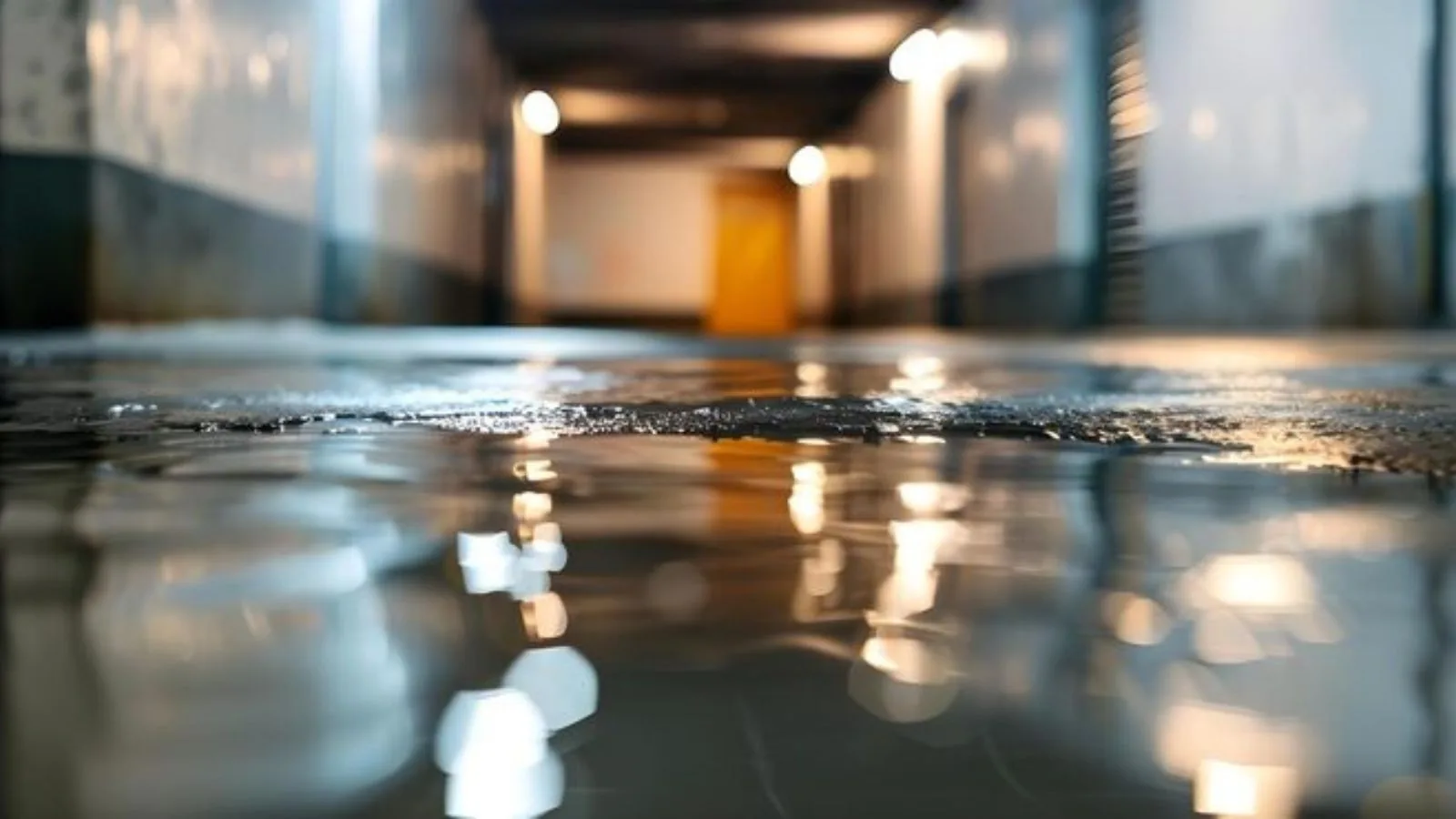
Flood water in a Wildwood building is an emergency because it carries mud, bacteria and debris, and it soaks everything it touches. The 24/7 line takes flood calls day and night. While you wait, stay out of moving water, keep away from electrical equipment, and do not drive through flooded roads.
Flood damage restoration is the cleanup and drying of a building after water enters from outside, from creeks, rivers or surface runoff. It differs from a pipe failure because floodwater is treated as contaminated from the start.
When flood water is an emergency
Flood water is dangerous even when it looks shallow. It may hide holes, carry sewage from overloaded drains, and reach outlets. Treat any water that came from outside as contaminated, wear boots and gloves if you must enter, and wash well afterward.
Do not enter a flooded basement while water is still rising, and never run a gas-powered generator indoors. If water reached the panel, the furnace or the water heater, call the utility before anyone restores power.
Roads, rescue and rising water
Wildwood's Board of Public Safety heard in August 2025 that the road beside Wild Horse Creek sits in the floodway, that it has frequent roadway overtopping, and that swift-water rescues have happened on or near it. Never drive or walk through flowing water, and call 911 for anyone in danger before you call for cleanup.
The creeks and the river
Wildwood has more than one flood source. Wild Horse Creek runs from beyond Route T to the Missouri River in Chesterfield Valley, according to a city councilman quoted in the August 2025 board article. The Meramec River floods the valley towns to the south, and its December 2015 crests set records at Pacific, Eureka and Valley Park, according to the National Weather Service.
That is why the best habit in Wildwood is to check the FEMA flood map for your address before you buy, repair or insure. A property near a creek can flood in a heavy rain even when the Meramec is quiet. For a community on the Meramec side of the city, see Glencoe.
What flood cleanup involves
Flood cleanup starts with safety. Crews wear protective gear, remove standing water, and take out materials that cannot be cleaned, such as soaked carpet, pad and wet insulation. Drywall that touched flood water is cut out above the waterline, because water wicks upward.
Surfaces that stay are cleaned and sanitized, and then the structure is dried with air movers and dehumidifiers. The structural drying page explains how readings confirm the dry-out. For below-grade rooms, the basement page covers the extra steps.
| Item touched by flood water | Usual outcome | Why |
|---|---|---|
| Carpet and pad | Removed and replaced | Contaminated water is difficult to remove from porous material |
| Drywall below the waterline | Cut out and replaced | Water wicks upward and holds contaminants |
| Hardwood and laminate floors | Case by case, often replaced | Wood absorbs water and can warp |
| Concrete and tile | Cleaned and sanitized | Hard surfaces can usually be cleaned |
| Upholstery and mattresses | Usually discarded | Porous materials hold contamination |
Permits and the 50 percent rule
Wildwood's floodplain code is specific. A floodplain development permit is required before development in the special flood hazard area, and repair counts as development. The code defines substantial damage as damage where the cost of restoration equals or exceeds 50 percent of the structure's market value before the damage occurred.
If a building is substantially damaged, it generally has to meet the floodplain standards when rebuilt, which can include raising the lowest floor, basement included, two feet above base flood elevation for residential buildings. Talk to the city before repairs begin, because the rule affects what you are allowed to rebuild.
What affects the cost
- Water depth and duration. Water that sat for days soaks deeper than a quick surge.
- Contamination. Flood water is handled as contaminated, which adds protective steps.
- Materials removed. Carpet, pad, insulation and lower drywall often come out.
- Drying time. Larger and wetter structures need longer drying.
- Rebuild and permit scope. Floodplain rules can change what the rebuild involves.
Want your real number? Call the line. Scope and price are explained before work starts.
Flood water in the building?
Same-day response is offered when it is available.
Flood insurance is separate
The Missouri Department of Commerce and Insurance says flood damage is not typically covered by standard homeowners policies and must be purchased separately. If you are not sure whether you have flood coverage, check your policy and ask your insurer. Photograph the damage before moving anything, and keep receipts for emergency steps.
To see how flooding looks in a nearby river town, read about Pacific, where the city's own pages track Meramec crest forecasts. Water that came with sewage is covered at sewage backup cleanup.
Flood Damage Cleanup questions answered
Do you handle flood damage emergencies at night or on weekends in Wildwood?
Yes. The line is answered 24 hours a day, every day. Same-day response is offered when it is available, and flood cleanup safety steps are covered on the call.
Is flood damage covered by homeowners insurance?
Usually not. The Missouri Department of Commerce and Insurance says flood damage is not typically covered by standard policies and must be purchased separately. Check your policy and ask your insurer.
Do I need a permit to repair a flooded home in Wildwood?
Wildwood's floodplain code requires a floodplain development permit for development in a special flood hazard area, and repair is treated as development. Ask the city before work begins.
How do I check whether my address is in a flood zone?
Use the FEMA Flood Map Service Center and enter your address, and ask the city about floodplain rules for your property.