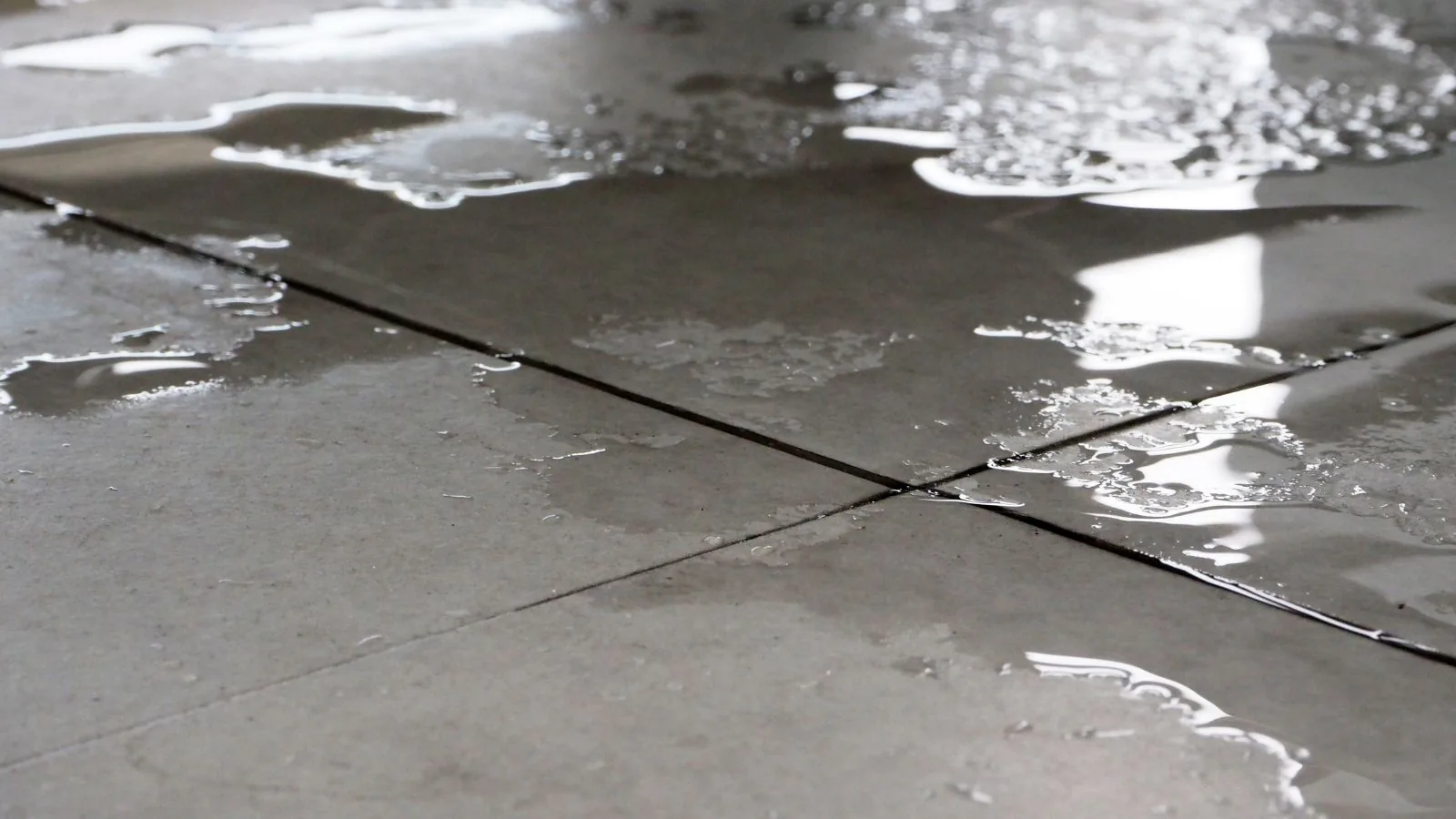
A slab leak is a leak in a water line that runs under or inside a concrete foundation slab. It is an emergency when water reaches the surface, because the line is pressurized and keeps flowing. If you see water coming up through flooring in your Wildwood home, close the main valve and call the 24/7 line.
Slab leak water damage is the damage that spreads through flooring, baseboards and subfloor after a pipe under the slab leaks.
Signs of a slab leak
Slab leaks are hidden, so the signs are indirect. You may hear running water when everything is off. A section of floor may feel warm, which points to a hot water line. Your water bill may jump with no change in use. You may see damp carpet, bubbling vinyl, lifted tile or cracks in a floor over a flat area.
Low water pressure and a meter that moves when all fixtures are off are also reasons to call. Check the meter with all taps closed. If it keeps turning, water is escaping somewhere.
If water is coming up through the floor
Treat any water coming up through flooring as an active leak. Close the main valve, keep power off in the affected area if outlets or cords are wet, and do not lift flooring yourself. Heat from a hot water line can scald, so do not walk barefoot across a warm, wet spot.
Symptoms that look like something else
Not every wet floor on a slab is a slab leak. A damp ring on carpet could be a window leak, a plumbing fixture or groundwater. A cracked floor could be settling. A warm spot might come from a heating duct.
That is why the first step is a moisture check. Meters and thermal imaging show whether water is rising from below or falling from above. A plumber then uses leak detection equipment to find the line. Restoration does not repair the pipe. It handles the flooring and drying.
How the damage is handled
Water that rose through the slab has soaked flooring, baseboards and the lower walls. Carpet and pad are lifted, wet drywall at the base is cut back, and the slab surface is dried. Concrete holds water, so dehumidifiers run for longer than they do for wood framing.
Plumbers repair slab leaks by rerouting the line, repairing the pipe in place or accessing the line through the slab. Rerouting often runs through the attic or walls. The structural drying page explains how the dry-out is confirmed, and the carpet page covers what can be saved.
| What you notice | What it can mean | Next step |
|---|---|---|
| Warm spot on a floor | Hot water line leaking under the slab | Close the main and call a plumber |
| Sound of running water | Leak somewhere in the supply | Check the meter with taps closed |
| Damp carpet or lifted tile | Water rising through the slab | Call the line for a moisture check |
| High bill with no change in use | Hidden leak | Meter test, then leak detection |
Permits and plumbing
Wildwood's Planning Department says new or replaced plumbing needs a permit. A slab leak repair that replaces or reroutes a line may fall under that rule, so ask the city before the repair starts.
Hot and cold lines
A leak in a hot water line under the slab warms the floor and can raise the water heater's run time. A cold line leak can make a slab feel cool and damp. Either one can raise the water bill sharply. Knowing which line is leaking helps the plumber choose how to reach it.
Standards and sources
Drying after a slab leak follows the ANSI/IICRC S500 standard, and concrete is treated as a material that releases moisture slowly. The EPA advises drying within 24 to 48 hours and keeping indoor humidity below 60 percent.
What affects the cost
- How long it leaked. Water under a slab can travel a long way before surfacing.
- Flooring type. Tile, vinyl, carpet and wood each dry and fail differently.
- Slab moisture. Concrete takes longer to dry than framing.
- Area affected. More rooms means more removal and equipment.
- Repair path. The plumbing repair and the finish work are priced apart from the dry-out.
Want your real number? Call the line. Scope and price are explained before work starts.
Water coming up through the floor?
Close the main valve and call.
Insurance and slab leaks
Policies differ on slab leaks. Some cover resulting water damage and not the pipe repair, and some exclude leaks that go on for a long time. Photograph the damage and the meter, keep receipts and ask your insurer how your policy treats the cause.
Slab Leak Water Damage questions answered
Do you handle slab leak emergencies at night or on weekends in Wildwood?
Yes. The line is open every hour. Same-day response is offered when it is available.
How do I know if I have a slab leak?
Warm floor spots, the sound of running water, a high bill and a meter that moves with all taps off are the main signs.
Can you find the leak in the pipe?
A plumber does that with leak detection equipment. Restoration dries the flooring and prepares the repair.
Does concrete dry out?
Yes, but slowly. Dehumidifiers run until moisture readings return to a normal range.