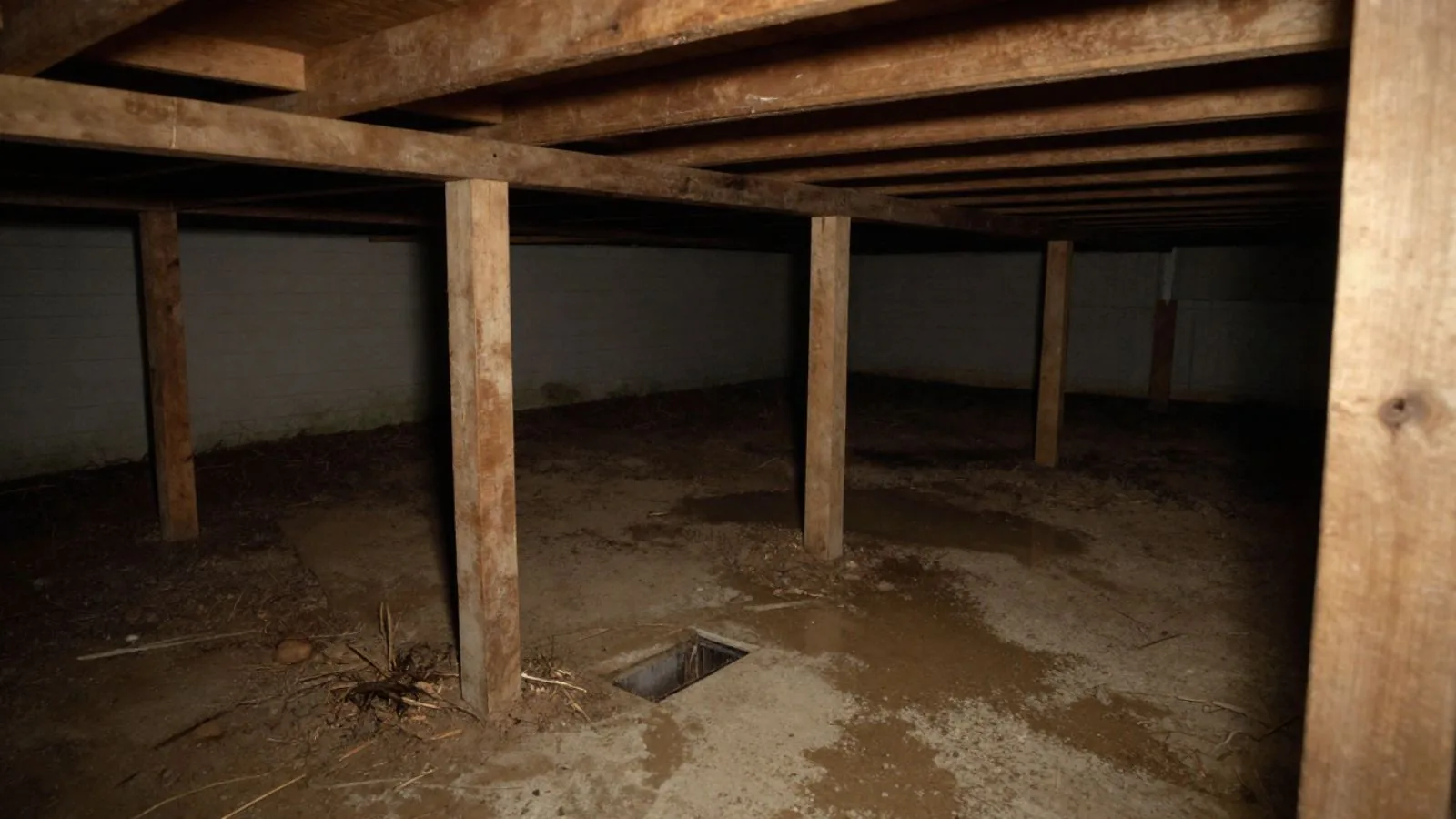
A crawl space with standing water or sagging insulation is a hidden problem that can affect the floors above it. Water here does not stay put. It raises humidity in the whole house, softens subfloor and feeds mold on framing. In Wildwood, where many homes sit on hillsides and creek banks, groundwater can reach the space after hard rain.
Crawl space water damage is the damage caused by standing water, leaks or high humidity beneath a raised floor.
Why crawl spaces get wet
Four sources account for most calls. Groundwater seeps through the foundation wall or floor after heavy rain. A supply or drain line under the house leaks. An HVAC condensate line empties into the space. Or humid air condenses on cool surfaces, which wets insulation and wood without any leak at all.
Wildwood covers more than 60 square miles with a mix of ridges, creek valleys and flat lots, so a crawl space in one neighborhood may stay bone dry while another floods after a storm. The storm page explains the weather side.
Going into a wet crawl space
Do not enter a crawl space that has standing water and exposed wiring, and do not crawl into a space that smells of sewage or gas. Water, tight space and electricity are a dangerous mix. Describe what you see to the line and let a crew with the right gear handle the entry.
Signs of trouble
Look for a musty smell in the house, cold or soft spots on floors, sagging insulation, white or dark growth on wood, and rust on nails and fasteners. Pests also show up in damp crawl spaces. High indoor humidity in summer is another clue.
A moisture reading above normal in the framing, even without visible water, means the space needs attention. The EPA advises keeping indoor humidity below 60 percent and ideally between 30 and 50 percent.
What the work involves
The first step is removing standing water with a pump. Wet insulation is pulled out because it holds water against the subfloor and does not dry well. The space is then dried with dehumidifiers and air movers, and moisture readings in the framing are logged until they return to a normal range.
After that, the cause is addressed. That may be regrading outside, clearing gutters, fixing a plumbing leak or adding a vapor barrier. Restoration handles the wet building. A contractor handles drainage and structure. The structural drying page explains how readings are tracked.
| Condition | Typical response |
|---|---|
| Standing water after rain | Pump out, dry, find the entry point |
| Wet or sagging insulation | Remove and replace once the space is dry |
| Elevated framing moisture, no visible water | Dehumidify and monitor readings |
| Visible growth on wood | Dry first, then see mold remediation |
Rebuilding and permits
Wildwood's Planning Department says minor repairs do not need a building permit but do need zoning authorization, and that structural alterations need a permit. Encapsulation or structural repair beyond a dry-out may fall under those rules, so ask the city before work begins.
Vapor barriers and insulation
Many crawl spaces have a plastic vapor barrier over the soil. A torn or missing barrier lets ground moisture rise into the space. After a dry-out, crews often point out gaps, and a contractor can lay or replace the barrier. Insulation between the floor joists should be dry and attached. Sagging insulation is a sign that it has been wet.
Pests and odor
Damp crawl spaces attract insects, rodents and other pests. A musty smell in the house that gets worse in humid weather often comes from the crawl space. Once the space is dry and the cause is addressed, the smell usually fades. If it does not, wet materials or growth remain somewhere in the framing.
Standards and sources
Crawl space drying follows the ANSI/IICRC S500 standard, and the EPA recommends indoor humidity below 60 percent. The EPA also says mold can start within 24 to 48 hours of wetting, so enclosed spaces should not be left to dry on their own.
What affects the cost
- Water source. A plumbing leak is a simpler fix than recurring groundwater.
- Access. Low clearance slows every task.
- Insulation. The amount that is wet sets the removal volume.
- Mold. Growth adds containment and removal.
- Correction work. Drainage and vapor barrier work are priced separately.
Want your real number? Call the line. Scope and price are explained before work starts.
Water under the house?
Describe what you see and the line will take it from there.
Insurance and crawl space water
Sudden leaks from plumbing are often covered. Groundwater and seepage are often not, and flood is usually excluded, which the Missouri Department of Commerce and Insurance says must be purchased separately. Photograph the space, keep receipts and ask your insurer.
Crawl Space Water Damage questions answered
Can I dry a wet crawl space myself?
You can pump out shallow water. Wet insulation and framing moisture need equipment and readings, and the space is hard to work in safely.
Is moisture in a crawl space dangerous?
It can feed mold and soften wood. Humidity in the crawl space also reaches the living area.
What causes a crawl space to get wet?
Groundwater, plumbing leaks, condensate lines and humid air. Finding the source is the first job.
Should wet insulation be removed?
Usually yes. Wet insulation holds moisture against the floor and rarely dries on its own.