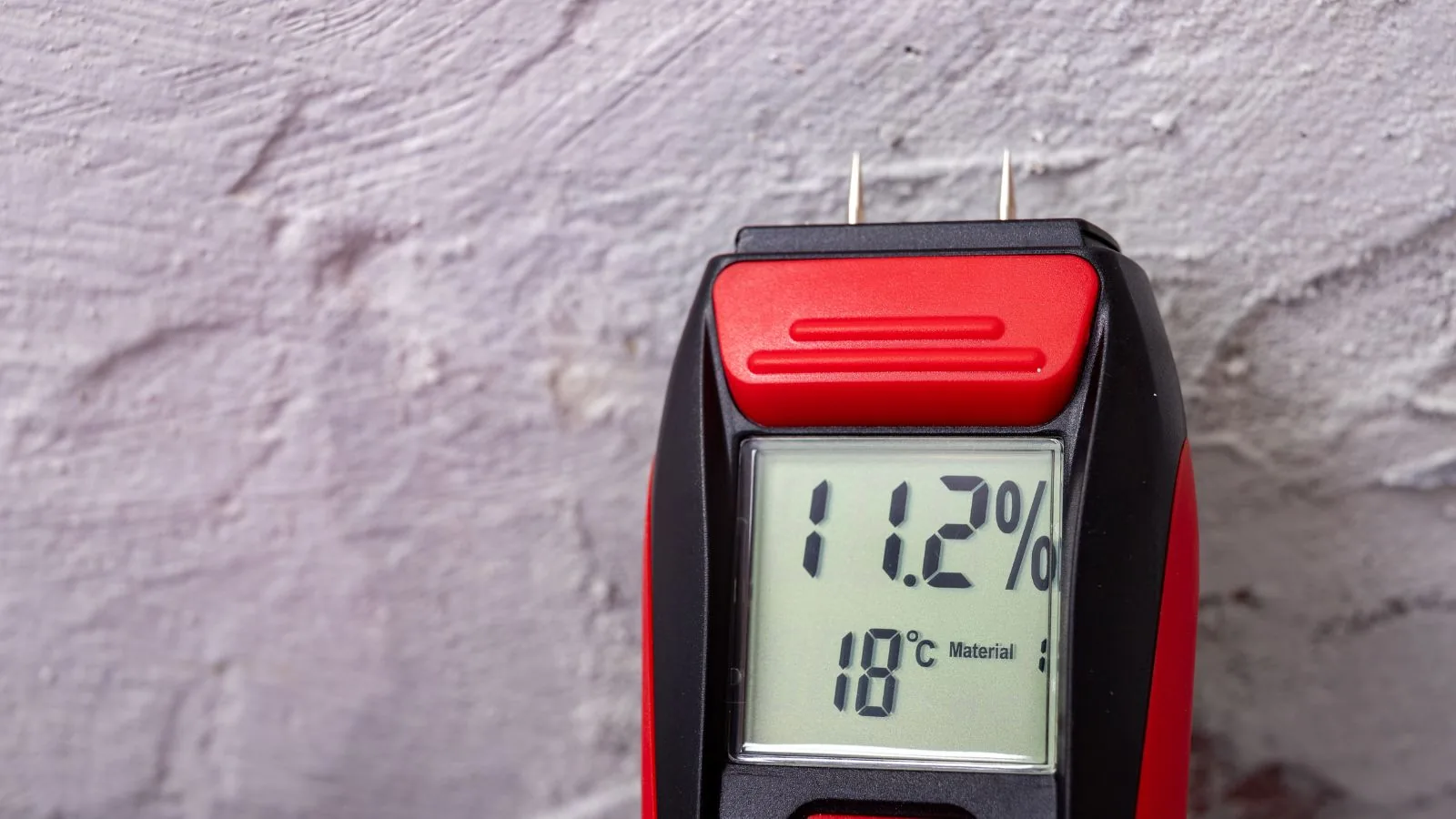
Structural drying is the controlled removal of moisture from a building's framing, subfloor, drywall and contents after water damage. It is the stage that decides whether a house returns to normal or develops mold in the walls a month later. The EPA advises drying water-damaged areas within 24 to 48 hours to prevent mold growth.
Dehumidification is the part of drying that pulls moisture out of the air, so the wet materials can release more of it. Both work together.
Why surface dry is not dry
A floor can feel dry while the subfloor beneath it is wet. A wall can look fine while the cavity holds saturated insulation. Wood, drywall and concrete hold moisture deep inside, and it comes out slowly. If the building is closed up before it is dry, trapped moisture feeds mold and rot.
That is why drying is verified with instruments, not by touch. Moisture meters read materials, and thermal imaging shows cool, wet areas behind surfaces. Hygrometers track the humidity of the air.
Symptoms of incomplete drying
Even after cleanup, some warning signs mean the structure is still wet.
- A musty smell that returns after a few days.
- Cupping or buckling floors that were not there at first.
- Baseboards that swell, pull away or stain.
- Paint that bubbles or peels on a wall.
- Windows that fog or condensation on cold surfaces.
- Visible spots of growth in corners or behind furniture.
If any of these show up, call and ask for a moisture check. Catching it early limits the work.
The equipment
| Equipment | What it does |
|---|---|
| Air movers | Move air across wet surfaces to speed evaporation |
| Dehumidifiers | Pull moisture out of the air so materials keep releasing it |
| Moisture meters | Read moisture content in drywall, wood and concrete |
| Thermal camera | Shows cool, wet areas hidden behind surfaces |
| Hygrometer | Tracks temperature and humidity of the room air |
How the process runs
Drying starts with a moisture map. Crews take readings across the affected area and mark where water has traveled. Equipment is placed to match the map, and it runs continuously. Each day the crew returns, logs readings and adjusts placement.
The goal is a dry standard. That means readings in the structure return to the range of an unaffected, similar material in the same building. The IICRC S500 standard guides this practice. When all points reach that range, the equipment comes out. You can ask to see the log.
The EPA says indoor humidity should stay below 60 percent, ideally between 30 and 50 percent, to limit mold. That helps explain why dehumidifiers matter as much as fans.
What to expect at home
Equipment is loud and warm, and it runs around the clock. Keep doors and windows closed so humidity stays controlled. Do not move air movers or unplug dehumidifiers. Electricity use goes up. Drying often takes several days, depending on materials and the amount of water.
Wet materials that cannot be dried, such as soaked pad and insulation, are removed first so equipment can focus on what can be saved. For sources of water, see water extraction and flood damage.
Closed building, controlled drying
During drying, doors and windows stay closed so the dehumidifiers can lower the humidity of the room. Opening windows lets humid outdoor air in, especially in a Missouri summer. In cold weather, heat helps drying because warmer air holds more moisture. Crews balance both and watch the readings.
Why equipment placement matters
Air movers are placed to push air along walls and across floors, not at the middle of a room. Dehumidifiers are sized to the volume of air and the amount of water. Putting too little equipment in slows the job, and putting too much wastes electricity. Daily readings tell the crew whether to add, move or remove equipment.
What affects the cost
- Size of the wet area. More square footage means more equipment.
- Materials. Concrete and hardwood dry slowly.
- Number of drying days. Cost scales with equipment days.
- Conditions. Humid weather slows drying.
- Monitoring. Daily visits and readings are part of the work.
Want your real number? Call the line. Scope and price are explained before work starts.
Want a moisture check?
Call the line and ask how readings are logged.
Insurance and drying documentation
Insurers often ask for moisture logs and equipment records, so keep copies. Photograph the damage before drying begins and ask your insurer what documentation they need.
Structural Drying questions answered
How long does drying take?
Often several days, but there is no fixed number. It depends on the materials, the amount of water and conditions in the building. Readings decide.
How do I know my house is dry?
Ask to see the moisture log. When readings in the structure match those of unaffected material, drying is done.
Can I use my own fans?
Household fans help a little, but they do not remove moisture from the air or from deep materials.
Why is dehumidification needed?
Fans move moisture into the air. Dehumidifiers remove it so that the air can absorb more from the structure.