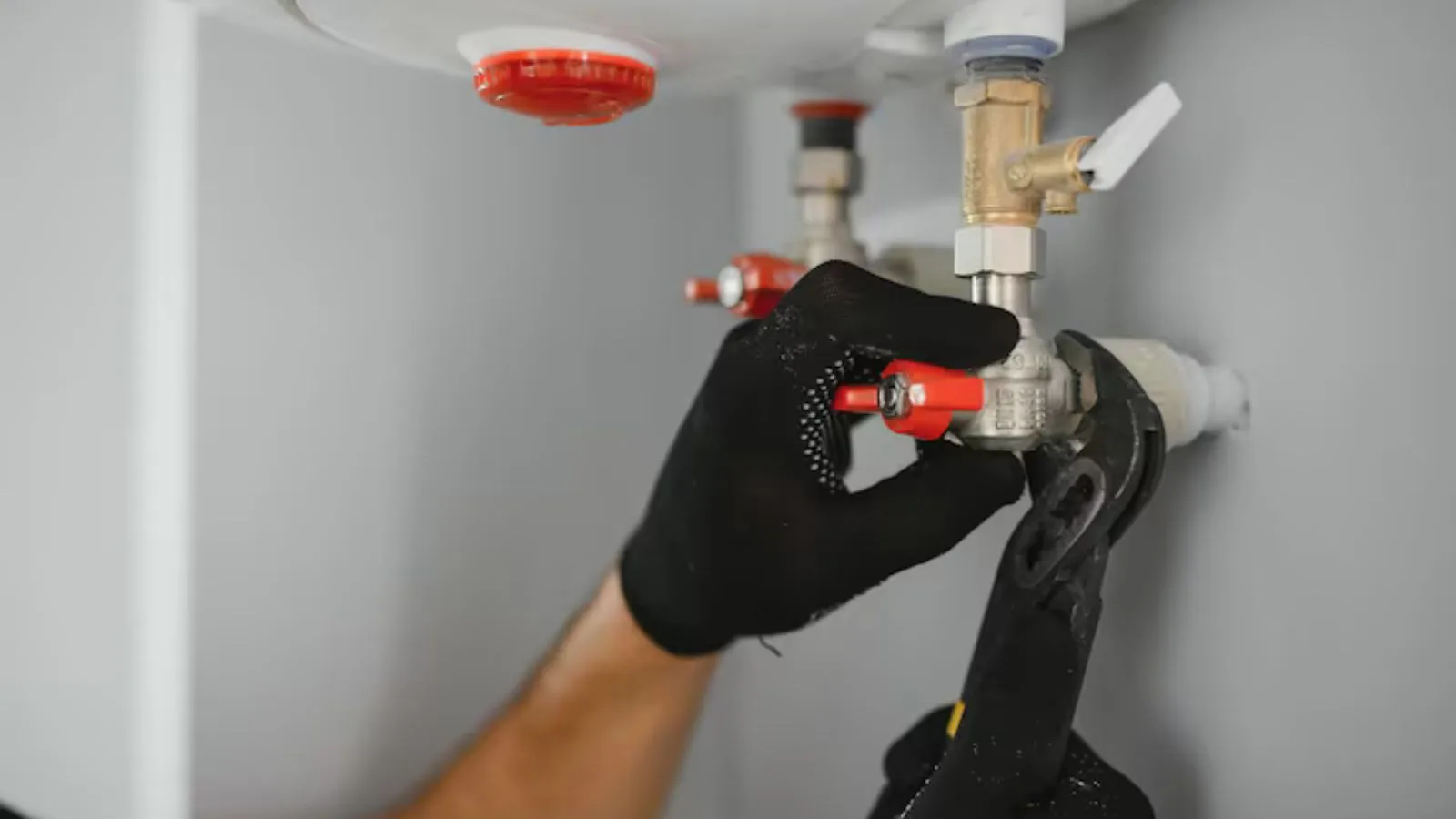
A water heater leak is an emergency because the tank refills from the supply line as fast as it leaks. If your water heater is leaking in a Wildwood home, turn off the power or gas to the unit, close the cold water valve above it, and call the 24/7 line. While you wait, keep clear of the water if the unit is electric.
Water heater leak cleanup is the removal of water released by a failed tank, a leaking fitting or a relief valve that discharged, followed by drying the floor, walls and anything stored nearby.
Shut it down in the right order
The order matters. Electric units get the breaker switched off first, because the heating elements can burn out if the tank empties while they have power. Gas units get the gas control set to off or pilot. After that, close the cold water supply valve on the pipe above the tank, so no new water enters.
If the leak is a slow drip from a fitting, you can leave the tank full and call a plumber. If water is pouring from the tank body, the tank has failed, and draining it through the hose bib at the bottom with the supply closed reduces the flood.
Hot water and electricity do not mix
The water from a failing heater can be hot enough to scald. Do not touch a leaking tank or the pipes above it, and do not wade through water that touches an electric unit unless the breaker is off. If you smell gas, leave the house and call the gas utility or 911 from outside.
Why water heaters fail
Tanks age from the inside. Sediment builds on the bottom, the metal lining wears, and eventually a seam gives way. Connections fail too. The inlet and outlet fittings, the drain valve and the temperature and pressure relief valve are all common leak points.
A relief valve that discharges is doing its job, but a valve that drips constantly points to excess pressure or a worn valve. Each of these produces a different amount of water, so the first question on the call is simply where the water is coming from.
What gets wet
Where the heater sits decides the damage. A unit in a utility closet soaks the closet floor, adjoining walls and often the room next to it. A unit in a basement spreads across concrete and into stored boxes. A unit in an attic is the hardest case, because the water goes through the ceiling below, and the ceiling page covers that repair.
| Heater location | What gets wet | Typical response |
|---|---|---|
| Utility closet or garage | Floor, baseboards, drywall base | Extract, cut drywall base, dry |
| Basement | Concrete, stored items, lower walls | Extract, move contents, dehumidify |
| Attic or upper floor | Ceiling, insulation, rooms below | Remove wet ceiling, dry the cavity |
| Crawl space | Insulation, subfloor, soil | Remove wet insulation, dry the space |
Cleanup and drying
Crews extract the water, move or discard soaked contents, and measure moisture in the floor and walls. Drywall at the base of the closet or wall is usually cut a couple of feet up if it stayed wet. The area is then dried with air movers and dehumidifiers, which the structural drying page explains.
Replacing the heater itself is a plumbing job. Wildwood's Planning Department says new or replaced plumbing needs a permit, so ask whether a replacement tank counts before the new unit goes in.
Standards and sources
Cleanup after a tank failure follows the ANSI/IICRC S500 standard, and the EPA advises drying water-damaged areas within 24 to 48 hours. Water from a heater is usually clean at the start but is treated with more care as it sits.
What affects the cost
- How long it leaked. A slow drip found early is a smaller job than a tank that failed overnight.
- Location. Attics and finished basements raise the amount of building that gets wet.
- Materials. Carpet, laminate and cabinets near the heater add removal work.
- Drying time. Closed closets and concrete floors dry slowly.
- Replacement and rebuild. The new heater and the finish repairs are priced separately from the dry-out.
Want your real number? Call the line. Scope and price are explained before work starts.
Water heater leaking right now?
Close the cold valve and call.
Insurance and water heater failures
A sudden tank failure is often covered, and the tank itself usually is not, since it is treated as wear. Photograph the unit, the label and the water damage before anything is moved, keep receipts, and ask your insurer how your policy treats the cause.
Water Heater Leak Cleanup questions answered
Do you handle water heater leak emergencies at night or on weekends in Wildwood?
Yes. The line is open 24 hours a day. Water heaters tend to fail without warning, and same-day response is offered when it is available.
Should I turn off the water heater before the water?
Yes for the power or gas, and then close the cold supply valve above the tank. That stops the unit from heating an empty tank and stops new water from coming in.
Does the leaking tank count as water damage?
The water it releases does. The tank itself is a plumbing item, and a plumber handles replacement while restoration handles the dry-out.
How long does the area take to dry after a tank failure?
Drying is measured by moisture readings rather than by a set number of days. Concrete and enclosed closets take longer than open floors.