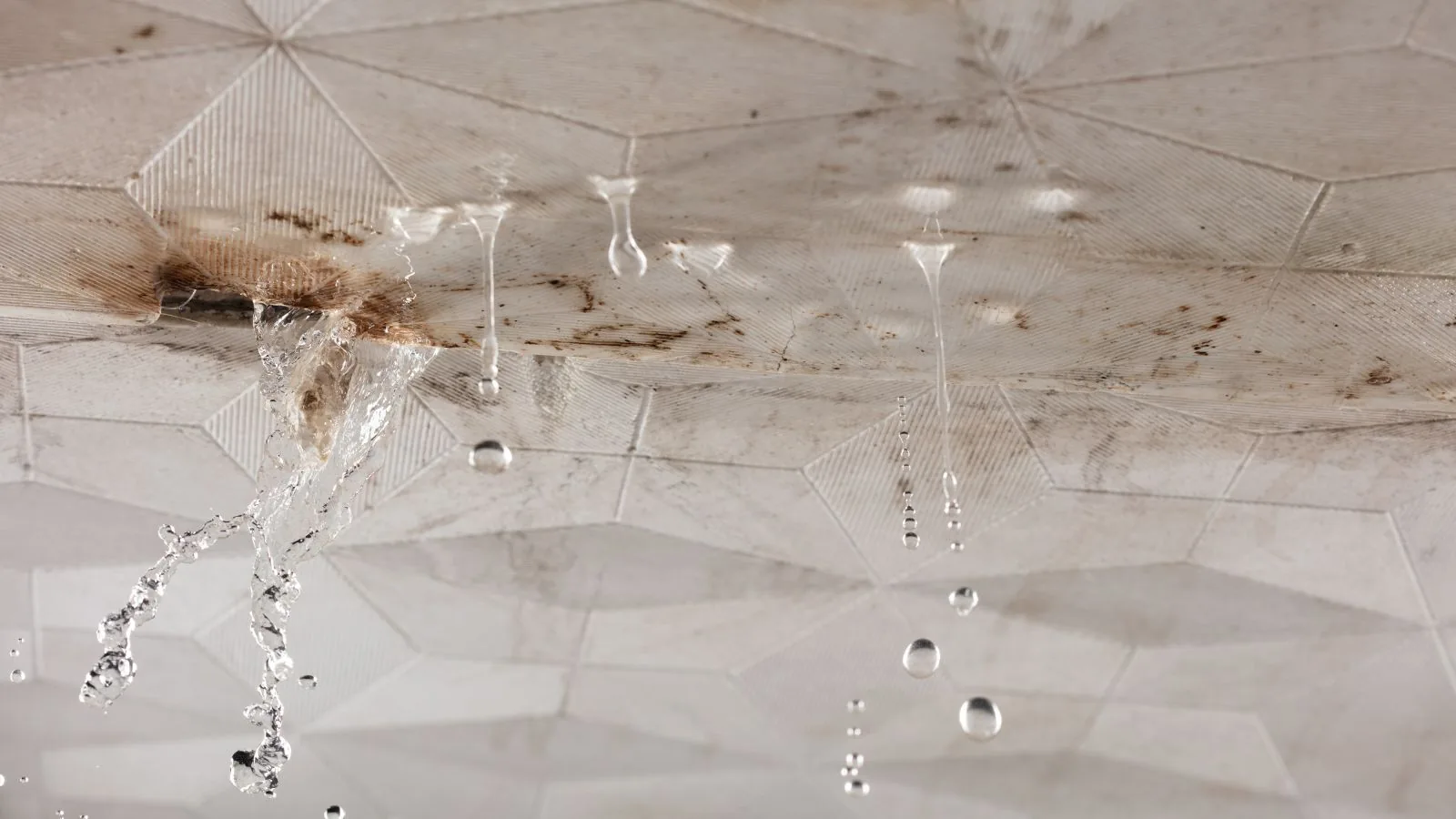
A dripping or sagging ceiling is an emergency because water is pooled above it, and the drywall can give way without warning. If water is coming through a ceiling in your Wildwood home, move people and valuables out from under it, then call the 24/7 line. While you wait, stay out of the room if the ceiling bulges.
Ceiling water damage repair covers the finished ceiling and whatever sits above it, no matter where the water came from. That includes roof leaks, which have no separate page on this site because the repair and the water path are the same.
When a ceiling stain is an emergency
A faint brown ring that has not changed in months is a maintenance item. A ceiling becomes an emergency when you see any of these.
- Dripping, or a bulge that holds water like a balloon.
- A stain that is growing, or that darkens after rain or after someone uses the bathroom above.
- Sagging, cracking or peeling drywall.
- Water near a light fixture or a ceiling fan.
Water, light fixtures and falling drywall
Do not stand under a bulging ceiling. If water is dripping from a fixture, turn off the circuit at the panel only if you can reach it safely, and otherwise call your electric utility or 911 for any shock or fire risk. Drilling a small hole in a bulge can drain trapped water, but only do that if you can stand clear of falling material.
Where the water comes from
The stain on the ceiling is rarely the source. Water travels along framing and the top of the drywall before it shows up, so the visible spot can be several feet from the real leak. Four sources account for most ceiling calls.
A roof leak sends rain through decking and insulation. A bathroom above sends water from a supply line, a drain or a tub overflow. A line in the attic or ceiling space, including a split supply line, leaks onto the drywall. An HVAC condensate line in the attic can overflow onto the ceiling below, which the AC leak page covers.
| Clue | Likely source | First check |
|---|---|---|
| Stain grows after rain | Roof, flashing or a vent | Look for missing or lifted roofing |
| Stain below a bathroom | Supply, drain or tub | Check under the fixture above |
| Stain near an attic air handler | Condensate drain overflow | Check the drain pan and line |
| Steady drip with no rain | A pressurized supply line | Close the main valve |
The roof leak section
Roofs do not leak where the water shows up inside. Rain can enter at a flashing, a vent pipe or a cracked shingle, then run along the roof deck before it drops onto insulation and drywall. A tarp or a temporary patch keeps more water out until a roofer makes a permanent repair.
Restoration handles the inside. Wet insulation is removed because it holds water against the ceiling, the drywall is cut back to dry material, and the cavity is dried before anything is rebuilt. A roofer handles the roof. The two jobs are separate, and you need both. For weather-driven damage that comes through other openings, see storm water damage.
How the repair goes
Moisture meters and thermal imaging show how far the water spread. Wet drywall is cut out, wet insulation is removed, and the area is dried with air movers and dehumidifiers. After the structure is dry, new drywall is hung, finished and painted, and any damaged insulation is replaced.
A small stain on solid drywall may be dried and sealed, then painted. Stained drywall that is soft, sagging or moldy has to come out. If the water was in the ceiling for a long time, the mold remediation page explains the next steps.
Wildwood's Planning Department says minor repairs do not need a building permit but do need a zoning authorization, and that structural alterations to an existing building need a permit. If a ceiling collapse involves framing or roof structure, ask the city before work begins.
Standards and sources
Wet ceilings and insulation are dried under the ANSI/IICRC S500 standard, and the EPA notes that mold can begin within 24 to 48 hours of wetting. That is why attic insulation is checked even when the ceiling looks only mildly stained.
What affects the cost
- Size of the damaged area. A single stained panel is a smaller job than a whole ceiling.
- What is above it. An attic with wet insulation adds removal and drying.
- Water source and category. A clean supply line differs from a roof leak that carried debris.
- Drying time. Attic and ceiling cavities can be slow to dry.
- Finish work. Texture, paint and any higher ceiling raise the repair step.
Want your real number? Call the line. Scope and price are explained before work starts.
Water coming through the ceiling?
Same-day response is offered when it is available.
Insurance and ceiling damage
Sudden and accidental water damage is often covered, and a long-running leak that was ignored often is not. Take photos of the ceiling and the room before any repair, keep receipts for emergency steps like a tarp, and ask your insurer how your policy treats the cause.
Ceiling Water Damage Repair questions answered
Do you handle ceiling water emergencies at night or on weekends in Wildwood?
Yes. The line is open 24 hours a day, and ceiling leaks often start during storms, at night or on weekends. Same-day response is offered when it is available.
Can I leave a ceiling stain alone if it stops growing?
A dry, stable stain is cosmetic, but you should still find the source. Water that returns will damage the drywall again and may feed mold.
Do you repair roofs?
Restoration here covers the water damage inside the building. A roofer fixes the roof, and the two jobs are done in sequence.
How do I know the ceiling cavity is dry before it is closed up?
Crews take moisture readings of the drywall and framing and keep drying until they reach the target. Ask to see the readings before the new drywall goes up.