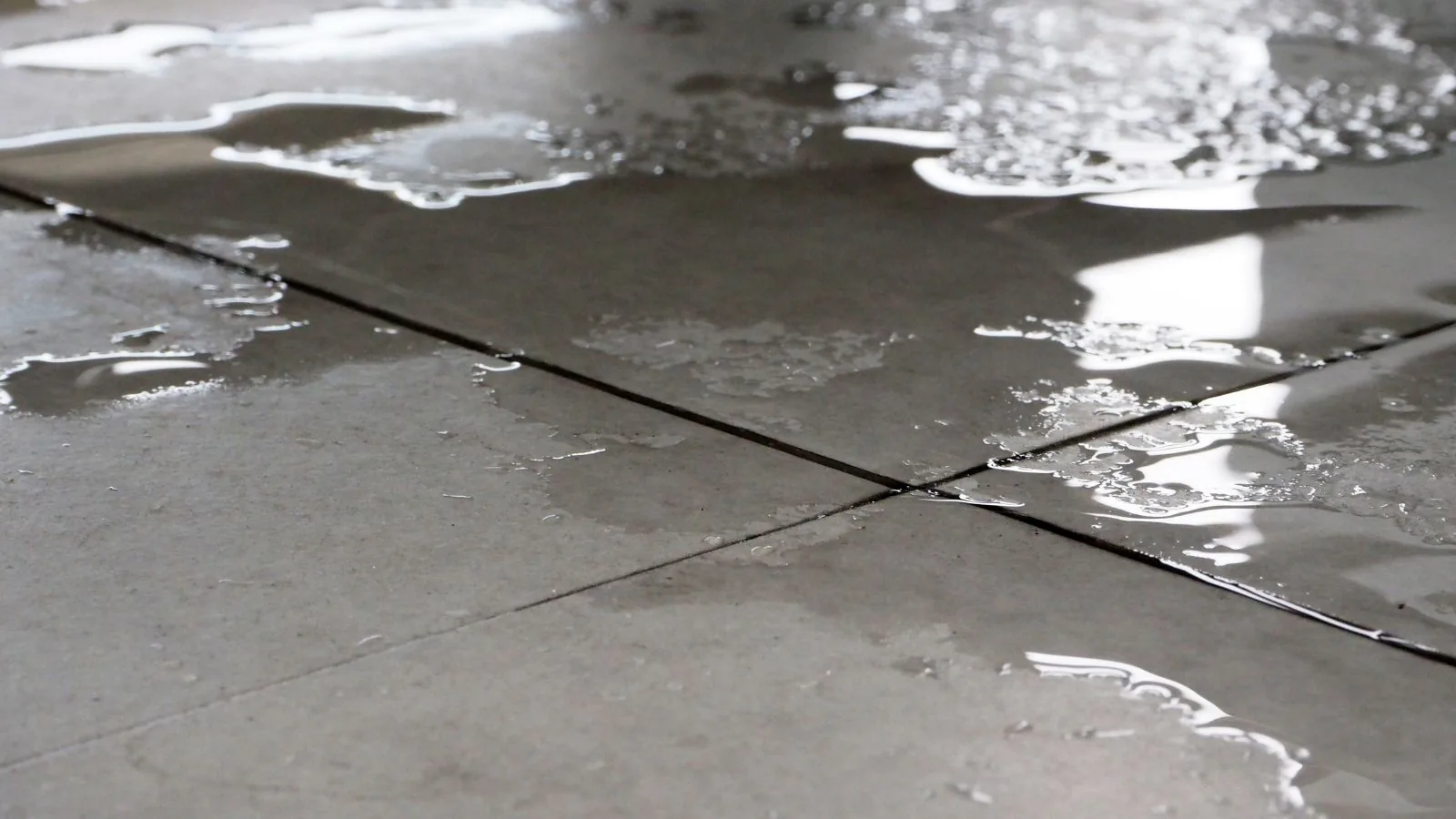
A hidden leak is any leak you cannot see, inside a wall, under a slab, above a ceiling or beneath flooring. It may show up first as a high bill, a sound or a smell. The sooner you find it, the less it costs, because water damages framing and feeds mold the longer it runs.
Warning signs
- A water bill that jumps with no change in use.
- Sound of running water when everything is off.
- A water meter that moves with all taps closed.
- Warm spots on a floor, which can mean a hot water line leak.
- Stains, bubbling paint or peeling wallpaper.
- Musty smells with no visible source.
- Soft, buckled or warped flooring.
- Low water pressure.
The water meter test
This test works for most homes and takes about half an hour.
- Turn off every tap and appliance, including the ice maker and dishwasher.
- Find the water meter, usually in a box near the street or in the basement.
- Look at the small triangle or dial that spins with low flow.
- If it moves, water is flowing somewhere. If it stays still, wait 15 minutes and check again.
- Close the main valve inside the house and check the meter again. If it still moves, the leak is between the meter and the house. If it stops, the leak is inside.
Wildwood's city FAQ says water is provided by Missouri American Water, so questions about the meter, the service line or a spike in your bill go to them.
The meter and the main in Wildwood
Because water service in Wildwood comes from Missouri American Water and sewer from MSD Project Clear, a leak outside the house can be the utility's side or yours. The shutoff at the meter is the utility's, and the valve inside the house is yours. Knowing where both are before a leak starts saves time, and the city says new or replaced plumbing needs a permit, so ask before a repair that replaces a section of line.
Room by room checks
- Toilets. Put food coloring in the tank. Color in the bowl without flushing means a leak. Check the base for softness.
- Under sinks. Look for drips, stains and swollen cabinet bases.
- Water heater. Look for rust, puddles and dampness around fittings.
- Appliances. Check washing machine hoses, the dishwasher and the refrigerator line.
- Ceilings and walls. Look for stains below bathrooms and kitchens.
- Outdoors. Look for soggy ground, a hose bib that drips and downspouts that dump near the foundation.
- Irrigation. A sprinkler line break can look like a slab leak.
The appliance page and the water heater page cover those sources.
Tools that help
Moisture meters read the wetness of drywall and wood. Thermal imaging shows cool spots where evaporation is cooling a surface. Acoustic leak detectors hear water escaping from a pipe, and a plumber may use them for lines under a slab. The slab leak page explains how those leaks are found and why the plumber does the pipe and restoration does the drying.
What to do when you find it
Shut off the water at the nearest valve or the main. Photograph the damage. Call a plumber for the pipe and the 24/7 line for the water in the building. Dry within 24 to 48 hours as the EPA advises, to avoid mold. The structural drying page explains how that is verified.
When it is hidden for good reason
Some leaks are hard to find even with tools, such as pinhole leaks in copper lines in walls. If the meter moves and you cannot find the source, a plumber with leak detection equipment is the next step. Do not cut open walls at random. Moisture meters and thermal imaging narrow the search first.
What it costs to wait
A hidden leak that runs for weeks can rot framing and subfloor, stain ceilings and grow mold. Insurance may treat a sudden failure differently from one that went on for a long time, so photograph and report as soon as you find it. For a similar case in a river town, see the Eureka page.
Leaks outdoors and under the yard
Not every hidden leak is inside the house. A break in the service line between the meter and the house can saturate the yard without touching the building. Look for a patch of lawn that stays green or soggy in dry weather, a sunken spot in the ground or a sudden rise in the bill with no signs inside. Irrigation lines, hose bibs and pool fill lines are other places to check.
Because the service line is usually the homeowner's responsibility from the meter to the house, a plumber can test it and, if needed, find the break with listening equipment.
Using a moisture meter at home
A pin or pinless meter costs little and gives readings on drywall and wood. Take a reading on a wall you know is dry, then check along the stained wall and the wall below a bathroom. Higher numbers mark where moisture is. Meters give relative readings, so compare areas, and do not rely on a single number. If a reading stays high, call for a professional check.
When a leak is not a leak
Condensation on cold pipes, a window that sweats and a humid basement can all look like leaks. A dehumidifier and some insulation on cold water pipes often solves them. If the meter test shows no flow and the stain does not grow, condensation is the likelier cause.
Sources for this page
For reference, the EPA advises drying water-damaged materials within 24 to 48 hours, and professional drying follows the ANSI/IICRC S500 standard. Both matter once a hidden leak has been found and stopped.
Questions homeowners ask
How do I know if I have a hidden leak?
A high bill, a moving meter with taps off, warm floor spots, musty smells and stains are the usual signs.
Who finds a leak under the slab?
A plumber with leak detection equipment. Restoration dries the damage.
Is a leak covered by insurance?
Sudden damage is often covered. Long running leaks often are not. Ask your insurer.
Who do I call about a spike in my Wildwood water bill?
Missouri American Water provides water in Wildwood. Check inside first, then contact them about the meter.