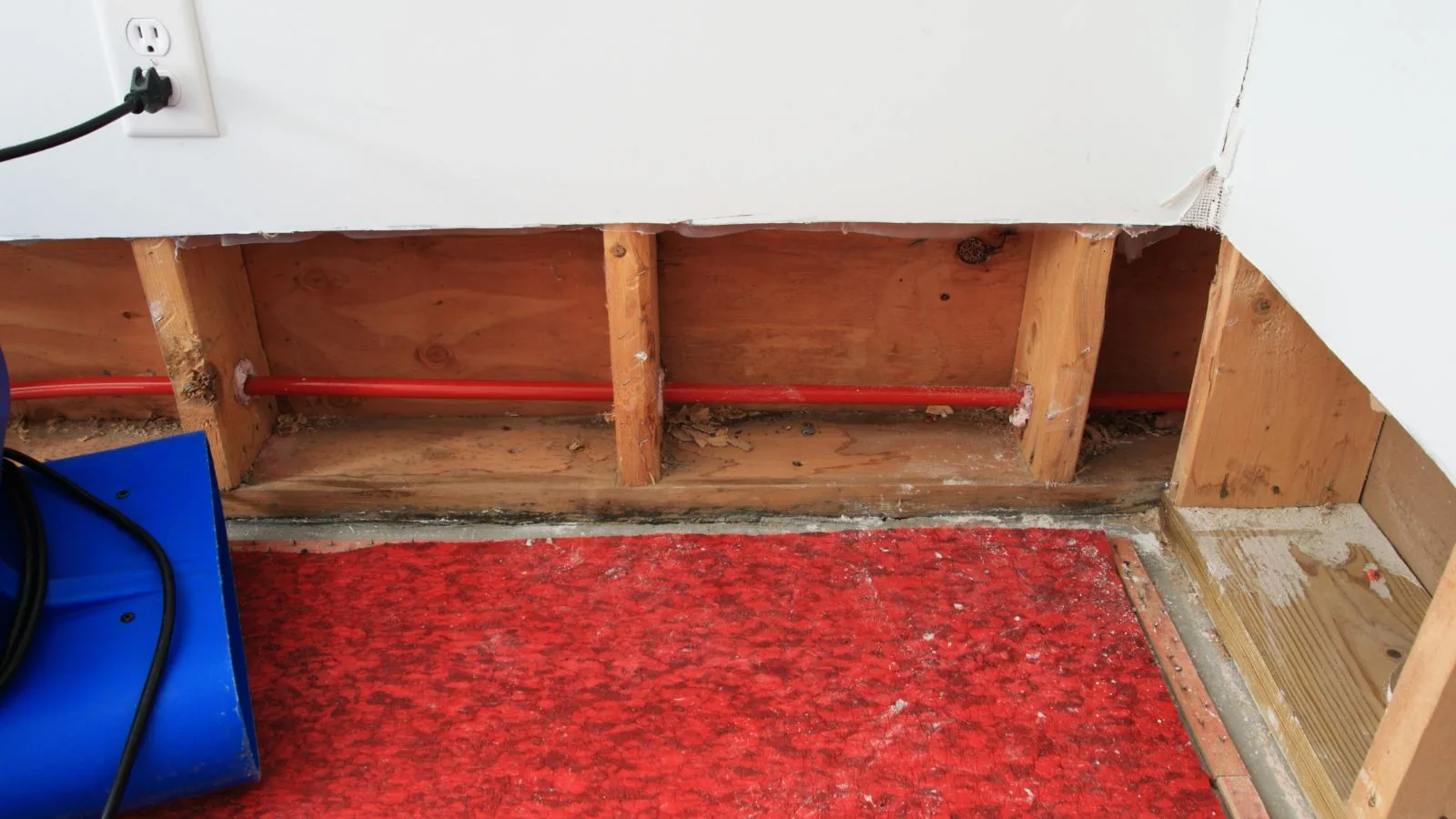
Mold can begin to grow within 24 to 48 hours after materials get wet, according to the EPA, which is why that range appears in most drying advice. It does not mean a house is covered in mold after two days. It means the window for easy recovery is short, and each day after that raises the odds of growth.
Why 24 to 48 hours
Mold spores are everywhere, indoors and out. They need moisture, a food source and a mild temperature to grow. Water damage supplies the moisture, and household materials supply the food. Drywall paper, wood, carpet, insulation and dust are all food for mold.
The EPA advises drying water-damaged areas within 24 to 48 hours to prevent growth. That number comes from agency guidance and not from a fixed rule of nature. Some materials stay clean longer, and some turn quickly, depending on conditions.
What speeds it up
- Warm temperatures. Mild indoor temperatures favor growth.
- High humidity. The EPA advises keeping indoor humidity below 60 percent, ideally 30 to 50 percent.
- Porous materials. Drywall, carpet pad, ceiling tile and cardboard stay wet and feed mold.
- Closed spaces. Wall cavities, closets and crawl spaces trap moisture.
- Dirty water. Contaminated water adds nutrients and bacteria.
What slows it down
Moving air, dehumidifiers, quick removal of wet materials and lower humidity all slow growth. Hard materials such as tile, glass and sealed concrete are less friendly to mold, though surface dirt can still grow it. Speed is the biggest factor, so start drying right away.
The weather and the clock in Wildwood
Missouri summers are warm and humid, which gives mold a head start after a storm or a leak.
Wildwood residents can sign up for the city's opt-in weather email system to get warnings, which gives time to prepare before heavy rain. In winter, a thaw after a hard freeze can send water through split pipes, and a closed-up house with no airflow keeps wall cavities damp. Season changes how fast you need to move, but the 24 to 48 hour guidance applies year round.
What to do in the first 48 hours
- Stop the source of water.
- Remove standing water. The water extraction page explains how.
- Remove wet items that cannot be dried, such as soaked pad and cardboard.
- Increase airflow and run a dehumidifier.
- Open wall cavities if the walls stayed wet.
- Photograph everything for your insurer.
- Call for a moisture check if you are unsure how far the water went.
Surface dry is not dry
A wall can look dry while the cavity holds wet insulation. A floor can feel dry while the subfloor holds water. Moisture meters and thermal imaging find what the eye cannot, and the structural drying page explains how readings are logged until the structure is dry.
What if it has been longer
If water sat longer than two days, look and smell for growth. Check behind baseboards, under sinks and in corners. If you find a small patch on a hard surface, you may clean it as described in our basement guide. If growth is large or inside a wall, call, and see the mold remediation page.
Water from sewage or floods needs faster action because it is contaminated. The flood damage page covers that, and the Pacific page describes a river town where it matters.
Insurance and timing
Many policies expect you to take reasonable steps to limit further damage, and drying is one of them. Waiting for a claim decision while mold grows can turn a smaller loss into a bigger one. Photograph the damage, call your insurer and begin drying.
Which materials go first
Not everything molds at the same speed. Paper-faced drywall, ceiling tile, cardboard and carpet pad are among the first to support growth, because paper and fibers are easy food. Solid lumber takes longer. Concrete and tile are poor food, although dust and soil on them can still support a little growth. When you decide what to dry and what to throw away, start with the fast ones.
Hidden growth and smell
Mold does not need to be visible to be present. A musty or earthy smell that returns after cleaning usually means growth in a wall, under flooring or above a ceiling. Look behind furniture pushed against an exterior wall, inside closets and under sinks. Pull back a corner of carpet if it has stayed damp. Moisture meters and thermal imaging are better than guesses.
How drying beats the clock
Professionals set up air movers and dehumidifiers within hours, remove materials that cannot be dried and keep readings until the structure is dry. A homeowner without equipment can still help by removing standing water, running a dehumidifier and fans, and opening cabinet doors and closets. These steps do not replace a moisture check, but they buy time. Call for help if the area is large or the water was dirty.
A simple two day plan
On day one, stop the water, remove what you can and start airflow and dehumidification. On day two, check the walls and floors with a meter or call for help, and remove anything still wet. If you are away or the area is large, hand the job to professionals the same day. The goal is not perfection, only to get the structure drying before growth gets a foothold.
Remember that every home is different. A tiled bathroom with a quick spill is a lower risk than a carpeted basement that sat wet overnight. Use the 24 to 48 hour guidance as a deadline for action, and treat longer waits as a reason to check carefully.
Questions homeowners ask
Does mold really start in 24 hours?
The EPA says it can begin within 24 to 48 hours, so drying within that window is the advice.
Can mold grow inside walls?
Yes, if the cavity stays wet. Moisture meters and thermal imaging can find it.
Does turning on the AC stop mold?
It helps by lowering humidity but does not dry wet materials. A dehumidifier and airflow work better.
What if I miss the 48 hour window?
Check for growth and call. Early action still limits the damage.