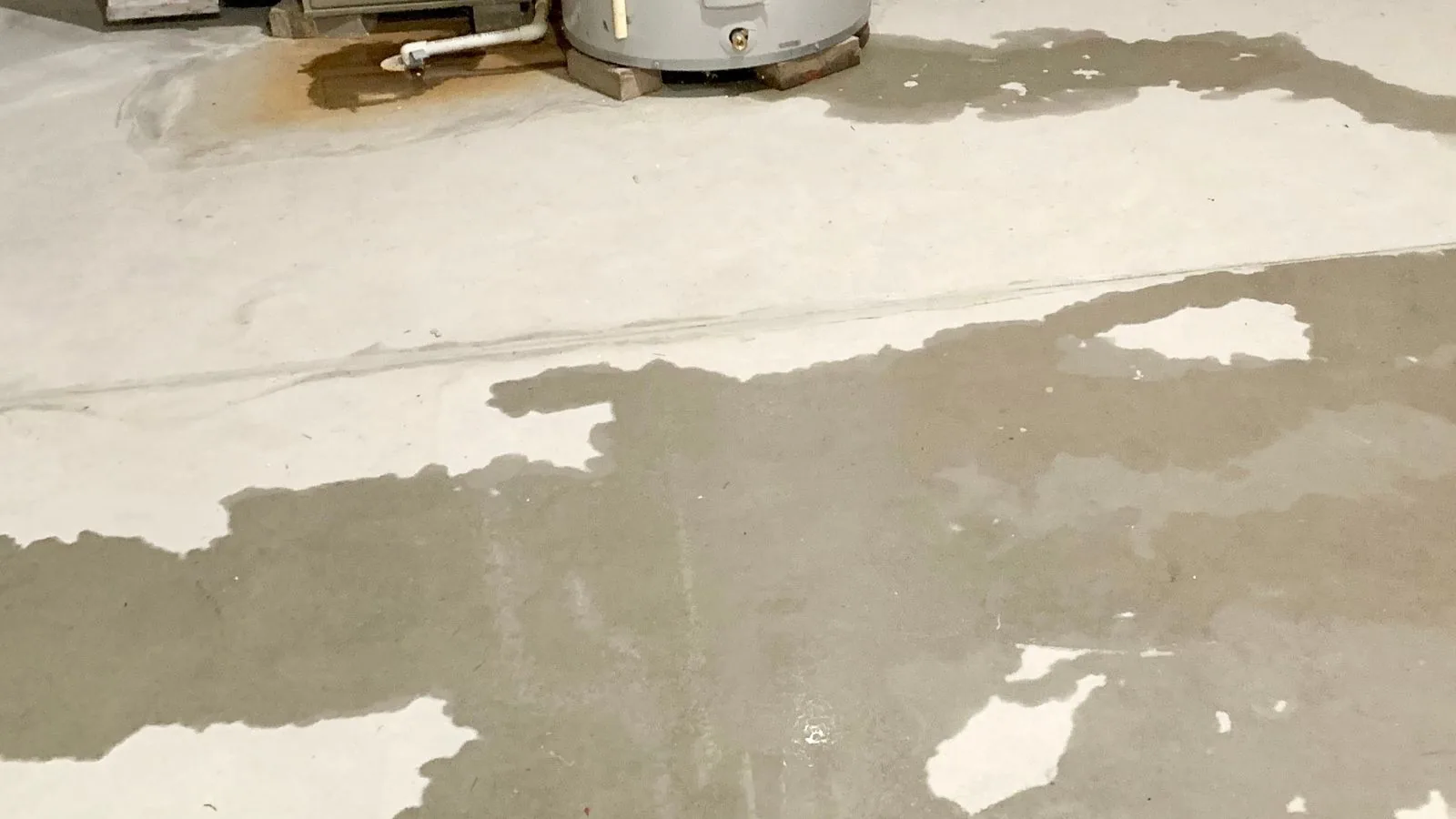
Mold in a basement is a symptom of moisture. Removing the mold without fixing the water is a temporary result, because growth returns wherever humidity stays high. This post is for homeowners deciding whether to hire a professional, and it explains what the work involves and what to ask. A different post covers do-it-yourself cleanup of small patches.
When hiring makes sense
The EPA gives about 10 square feet as a rough line. Below that, many people can clean mold on hard surfaces themselves. Above it, or in any of these cases, hiring a professional is more sensible.
- Growth covers more than about 10 square feet.
- Mold is inside walls, behind paneling or under carpet.
- The water came from sewage or flood water.
- Someone in the home has asthma, allergies or a weak immune system.
- Mold keeps returning after cleaning.
- The moisture source is unknown.
Find and fix the moisture first
Professionals start with the water. Common basement sources include groundwater through cracks, a failed sump pump, a leaking pipe, a water heater, dryer venting into the room and condensation on cold walls. The basement water damage page covers the water side, and the structural drying page explains how the space is dried.
Keep indoor humidity below 60 percent, ideally between 30 and 50 percent, as the EPA advises. A dehumidifier and a hygrometer are cheap tools that show whether the room is trending dry.
Wildwood basements and groundwater
Wildwood has ridges and creek valleys, and homes on slopes can collect runoff along foundation walls.
Basements near Wild Horse Creek and other drainage paths can see seepage after hard rain. The city's floodplain code requires a floodplain development permit for repairs in mapped flood areas, and it requires residential lowest floors, basements included, to sit two feet above base flood elevation if a building is rebuilt after substantial damage. If your basement is in a mapped floodplain, ask the city before any major work.
What professionals actually do
Industry practice follows the IICRC S520 standard. The steps are consistent from job to job.
- Assess the extent of the growth and the moisture.
- Control the source of water.
- Set up containment, using plastic barriers and negative air pressure.
- Run HEPA air filtration to capture airborne spores.
- Remove materials that cannot be cleaned, such as moldy drywall and carpet.
- Clean salvageable surfaces such as framing and concrete.
- Dry the area and confirm readings.
Containment is what separates remediation from scrubbing. It keeps spores from spreading to the rest of the house while the work is done. The mold remediation page walks through each stage in more detail.
Questions to ask before you hire
- What standard do you follow for the work?
- Does my state or city license mold work, and can I see proof? Missouri licensing for mold is not something this site can confirm, so ask.
- Will you set up containment and HEPA filtration?
- How will you address the moisture source?
- How will you verify the work is complete?
- Can I have a written scope and price before work starts?
Be wary of anyone who promises to remove every spore. Spores are part of normal air, and the goal is returning the home to normal levels and removing growth, not to reach zero.
Testing
Testing is a separate question. The EPA notes there are no federal limits for mold, so a lab number cannot say whether a home is safe. Visible growth and a moisture source are what drive the plan. Some homeowners ask for an assessment by someone who does not do the removal, and a separate post covers clearance testing.
What affects the cost
Cost depends on the area, the materials removed, how hard it is to reach and whether containment is needed. Basements with finished walls cost more than bare block. Scope and price should be written down before work begins.
If the basement flooded, the cleanup comes first. See the flood damage page and the Eureka page for what river flooding does in a nearby town.
What the day looks like
On the first visit, the crew walks the basement, takes moisture readings and photographs the affected areas. They will talk through containment, which rooms are involved and where the debris will go. Plastic sheeting goes up, a negative air machine with a HEPA filter runs, and workers wear protective suits and respirators.
Removal comes next. Moldy drywall, trim and carpet are cut out and bagged inside the containment. Remaining surfaces are vacuumed with HEPA equipment and wiped. The area is then dried, and the crew checks that no visible growth remains.
How long it can take
Small jobs may be done in a day or two, while larger ones take several days plus drying time. Rebuilding is a separate stage, and may involve new drywall, paint and flooring. The schedule depends on how much was removed, how fast it dries and whether permits are involved.
Living in the house during the work
Most families can stay in the house when containment is set up properly, but people with asthma or allergies may prefer to stay elsewhere during the removal. Keep the basement door closed, keep pets away and ask whether the HVAC system should be off. The crew should tell you what to expect before they start.
Comparing written scopes
If you collect more than one scope, compare them line by line. Look at the area covered, whether containment and HEPA filtration are included, how debris is handled, how drying will be confirmed and what is excluded. A lower price that leaves out containment is not the same service as a higher one that includes it. Ask each company to explain differences in plain words.
Questions homeowners ask
Do I need a professional for basement mold?
Small patches on hard surfaces can be cleaned by many homeowners. Larger or hidden growth needs professionals.
Will removing mold stop it coming back?
Only if the moisture source is fixed. Without that, growth returns.
Is a mold test required before removal?
Not usually. Visible growth and moisture drive the plan, and there are no federal mold limits.
Do Wildwood basements need a permit for mold work?
Cleaning does not usually. Rebuilding in a floodplain does. Ask the city.