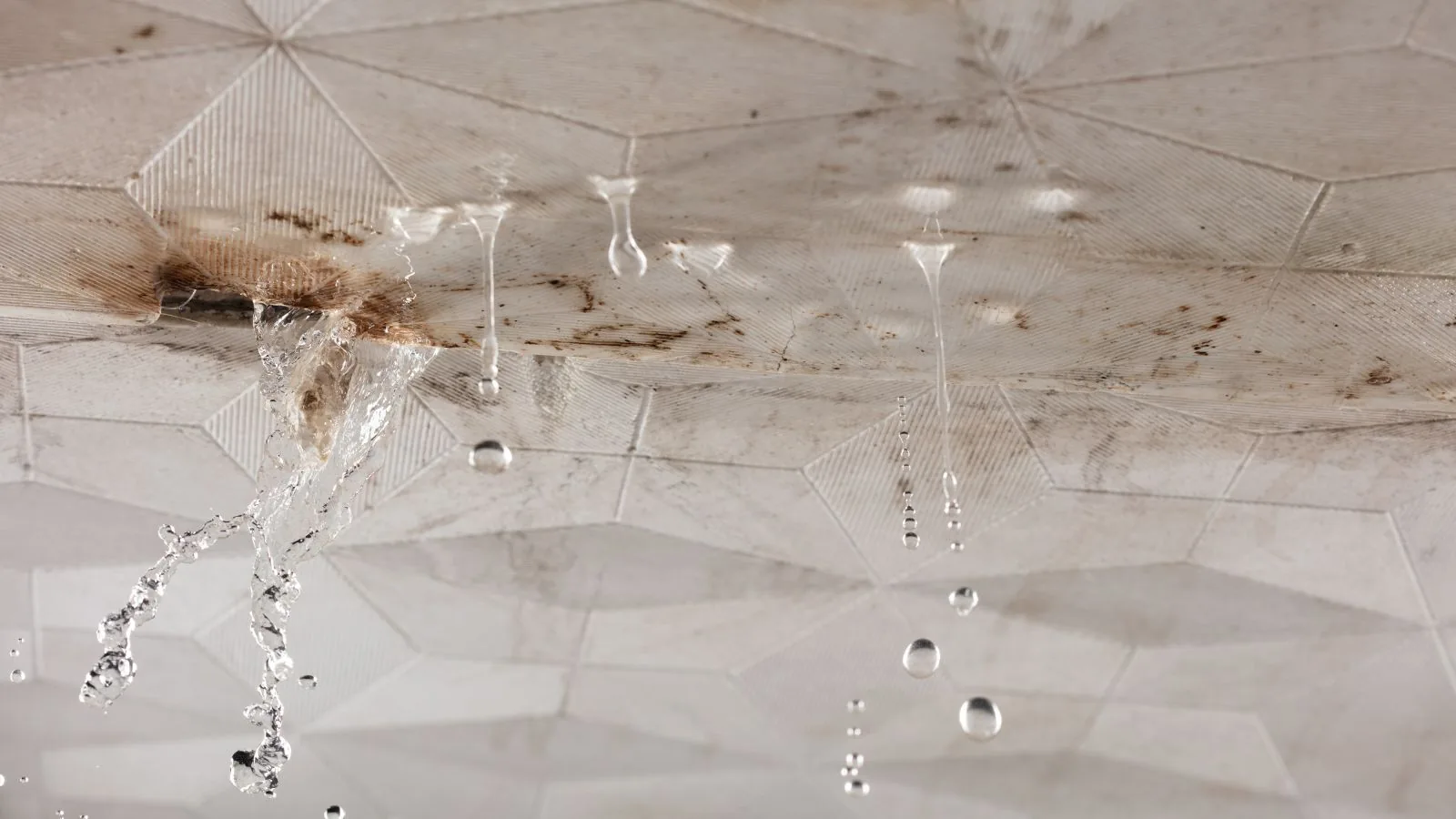
Telling old water damage from new matters in three situations. You are buying a house, you have found a stain and need to know if it is still active, or you are making an insurance claim and need to know when the damage began. A stain on its own does not give a date. The signs below help, and a moisture meter helps most.
Signs of new or active damage
- A stain that is damp or cool to the touch.
- A stain that is growing or darkening.
- Dripping, bubbling paint or wet drywall.
- A fresh musty smell.
- Swollen baseboards or fresh cupping in floors.
- A moisture meter reading that is high.
Active leaks often get worse after rain or after the fixture above is used. Watch the stain for a few days and mark its edge with a pencil.
Signs of old or dormant damage
- A dry stain with a defined brown ring, sometimes with several rings.
- Hard, brittle or crumbly drywall.
- Paint that has already peeled and dried.
- Rust on nails, screws or metal fittings.
- Discolored wood that is dry and firm.
- No change over weeks and a normal moisture reading.
Several rings usually mean the area has gotten wet more than once. That is a clue that the leak recurs, such as a roof flashing that fails in heavy rain.
Why a meter beats your eyes
A stain can be old and dry, or old and still wet from a slow leak. Paint can hide new damage. A moisture meter reads moisture content in drywall and wood, and thermal imaging shows cool areas where water is present. These tools tell you whether the material is wet now, though not when it first got wet.
Readings are compared with a dry reference from a similar material in the same house. If the stained area reads like the reference, it is dry. If it reads higher, there is moisture. The structural drying page explains how that is done.
Buying or inheriting an older Wildwood home
Wildwood was created from several older communities, including Grover, Pond, Glencoe, Fox Creek, Monarch and Hollow, and incorporated in 1995. Houses here range widely in age, so older plumbing and past repairs are part of many purchases. Ask for any past claims, repair records and permits. The city says new or replaced plumbing needs a permit, so a permit history is a useful clue about what was done and when.
Why the timeline matters
For repairs, old damage may mean hidden rot or mold that has been growing for a long time. For claims, many policies cover sudden damage and exclude gradual or long-term leaks, so an insurer may investigate how long a stain has been there. The Missouri Department of Commerce and Insurance advises documenting damage and contacting your insurer promptly. Photograph a stain the day you find it, with a date.
What to do with an old stain
A dry stain with normal readings can be sealed with a stain-blocking primer and painted. Fix the source first. If the drywall is soft or crumbling, cut it out. If you see growth, see the mold remediation page. If it is a ceiling stain, the ceiling page explains finding the source.
What to do with a new stain
Stop the source if you can, photograph the damage and call for drying. The EPA advises drying water-damaged areas within 24 to 48 hours. See the burst pipe page for a common cause.
Hidden damage in either case
Old damage is often behind a wall, under flooring or above a ceiling, where nothing shows. A musty smell with no visible stain is a reason for a moisture check. For nearby towns with older housing, see the Pacific page.
Buying a house with a stain
A stain on a ceiling in a house you want to buy deserves attention. Ask the seller what caused it, whether it was repaired and whether there are receipts. Ask an inspector to bring a moisture meter and look in the attic. Check the area again just before closing, since a dry stain can come back after a heavy rain.
If an inspection finds active moisture, you can negotiate repairs, ask for credits or walk away. Get written estimates for the work so you know the scale.
Photos and timelines
Take dated photos of any stain you find, with a coin or ruler for scale. Repeat them each week for a month. A stain that does not change and reads dry is probably old. A stain that grows or darkens after rain is active. These photos also help show an insurer that you noticed the problem and acted promptly.
Common hidden culprits
Roof flashing, vent boots, gaps around windows, a failing wax ring, sweating pipes in an attic and a cracked drain line behind a wall all produce stains that come and go. The visible mark may be some distance from the cause, so trace upward and along the framing. When you are unsure, the ceiling page explains how leaks travel.
Questions for a seller or landlord
Ask when the stain first appeared, what was done about it and who did the work. Ask whether an insurance claim was filed. Ask for receipts, permits and warranty papers. Honest answers are usually specific. Vague answers are a signal to bring in an inspector with a moisture meter before you commit.
Finally, keep a simple file for your house. Dated photos, repair receipts and moisture readings tell the story of every leak the house has had, and that history helps when you sell, insure or repair the home later.
Sources for this page
Professional moisture assessment follows the ANSI/IICRC S500 standard, and the EPA advises drying water-damaged areas within 24 to 48 hours. The Missouri Department of Commerce and Insurance gives the claim documentation advice referenced above.
Questions homeowners ask
Can you tell exactly how old a water stain is?
Not from the stain alone. Rings and texture give clues, and a moisture meter shows whether it is wet now.
Is a dry stain safe to paint over?
Only after the source is fixed and readings are normal. Use a stain-blocking primer.
Does a recurring stain mean a recurring leak?
Often yes. Several rings suggest repeated wetting.
Will an inspector find old water damage in a house I want to buy?
Moisture meters and thermal imaging help. Ask for repair and permit records too.