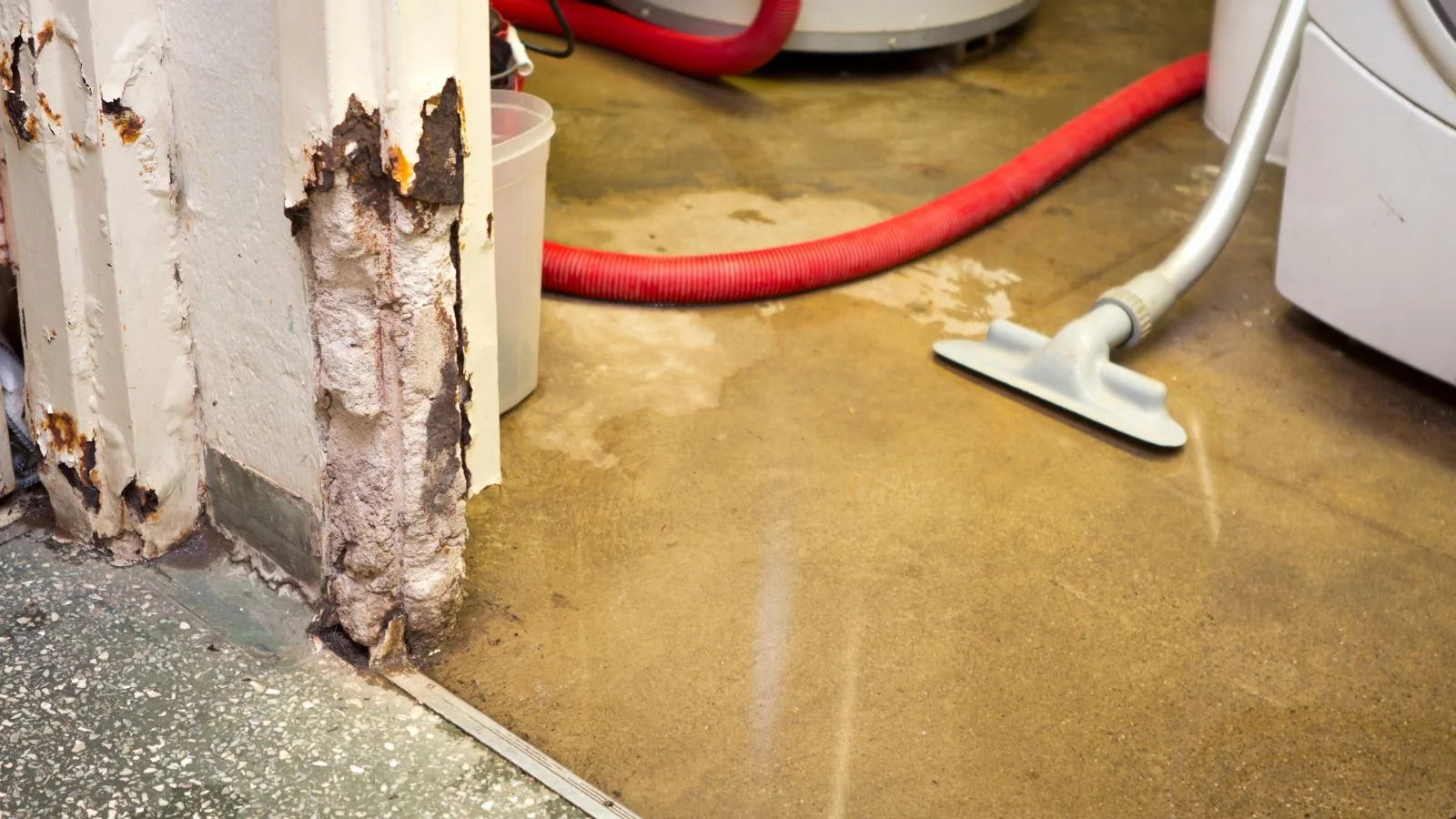
Water damage is sorted into three categories based on how contaminated the water is. The categories come from the IICRC S500 standard for water damage restoration, which the industry uses as a reference. Knowing the category tells you what can be saved, what must be thrown out and how careful everyone needs to be.
Category 1: clean water
Category 1 water comes from a sanitary source and does not pose a significant health risk at the start. Examples include a broken supply line, a leaking faucet, a failed water heater or an overflowing sink with clean water. It is the least risky of the three.
This is the category that is easiest to dry and clean. Carpet, pad, drywall and wood can often be saved if drying begins quickly. See the burst pipe page for a typical case.
Category 2: gray water
Category 2 water has some contamination and can cause illness if people come into contact with it. Common sources include a washing machine overflow, a dishwasher discharge, a toilet overflow with urine but no feces, and water from a sump pump failure.
Gray water is handled with more caution. Porous materials such as carpet pad and insulation are often removed, and hard surfaces are cleaned and sanitized. The appliance leak page covers these sources.
Category 3: black water
Category 3 water is grossly contaminated and may carry harmful bacteria and viruses. Sewage backups, flood water from rivers and creeks and standing water that sat long enough to grow bacteria all qualify. Contact can cause serious illness.
Black water requires protective gear, careful removal and sanitizing. Carpet, pad, lower drywall, insulation and other porous items usually must be thrown away. The sewage backup page and the flood damage page explain the process.
| Category | Typical source | Typical handling |
|---|---|---|
| 1, clean | Supply line, faucet, water heater | Dry and save what can be saved |
| 2, gray | Washer, dishwasher, sump overflow | Remove porous items, clean and dry |
| 3, black | Sewage, river or creek water | Protective gear, remove porous items, sanitize |
Water changes category over time
Clean water does not stay clean. The longer it sits in a house, the more it picks up from floors, materials and bacteria. A clean supply leak left for a few days may be treated as gray water. This is one reason speed matters, and the water extraction page explains the first steps.
Temperature, contact with soil or debris and the type of material all affect how quickly water degrades. A crew judges this on site and may test and note the category on the job record.
Where Wildwood water comes from matters
Wildwood has pipes and appliances like any town, but its creeks and nearby rivers put a significant amount of category 3 water in play. Wild Horse Creek overtops its roadway in heavy rain, according to the city's Board of Public Safety, and the Meramec River reached record crests in December 2015 at Pacific, Eureka and Valley Park, according to the National Weather Service. Creek and river water is always handled as category 3, even when it looks clear.
Water classes are a different scale
The S500 standard also uses classes 1 to 4, which describe how much water has soaked into materials and how fast it will evaporate. Class 1 is the least water and class 4 involves materials that hold water deeply, such as hardwood and concrete. Category is about contamination and class is about how wet the building is. Both shape the drying plan, as the structural drying page explains.
Why it matters for you
The category affects safety, cost and what insurance may say. Contaminated water costs more to clean because of protective measures and disposal. Sewer backup and flood coverage are often separate from a standard policy, according to the Missouri Department of Commerce and Insurance. Tell your insurer what you know about the source.
What you can do
Stay out of water that might be category 2 or 3. Keep children and pets away. Photograph the source. Tell the line where the water came from so the right team is sent. For a river-town example, see the Eureka page.
What the categories mean for your belongings
The category helps you decide what to keep. In category 1, most hard and soft items can be dried and cleaned if you act quickly. In category 2, soft items such as upholstered furniture and mattresses are often discarded, and hard items can be cleaned. In category 3, almost all porous items go, and hard items must be disinfected. Photograph everything before you toss it, and make a list for your insurer.
Testing and judgment
Crews do not usually test water to decide the category. They use the source, the time and what the water touched. Some situations are less obvious. For example, water that came up through a floor drain is category 3 even if it looks clear, and water from a clean line that soaked a dirty crawl space may be category 2 by the time it comes through the floor. When in doubt, the cautious category is assumed.
Safety for everyone in the house
Children, older adults and people with weak immune systems should stay out of category 2 and 3 areas. Do not run fans in a way that blows contaminated air through the house. Wear boots, gloves and eye protection if you must enter. Wash exposed skin right away, and seek medical advice if you feel unwell after contact.
Words you may hear on site
Crews may say black water, gray water or clean water. Those are informal names for categories 3, 2 and 1. They may also talk about classes, which describe how much water is in the materials. If a term is unclear, ask for a plain explanation. A good crew will gladly explain.
Questions homeowners ask
What is category 3 water damage?
Water that is grossly contaminated, such as sewage or river flood water. It needs protective gear and careful removal.
Can clean water become gray water?
Yes. The longer it sits, the more contaminated it can become.
Is rainwater category 1?
Not once it has entered the house and touched floors, soil or debris. Treat it with caution.
Who decides the category?
The crew assesses it on site, based on the source, the time and the conditions.